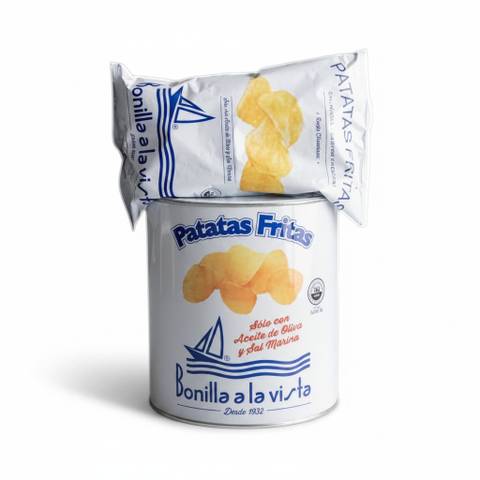
Bonilla a la Vista Potato Chips
Galicia’s Iconic Crunch
PHP 139.00
Pinkie's Farm
A delight of local flavor
Temporarily out of stock
The curators are restocking this item — sign up and we'll text you when it's back.
One SMS when it's restocked — no marketing.
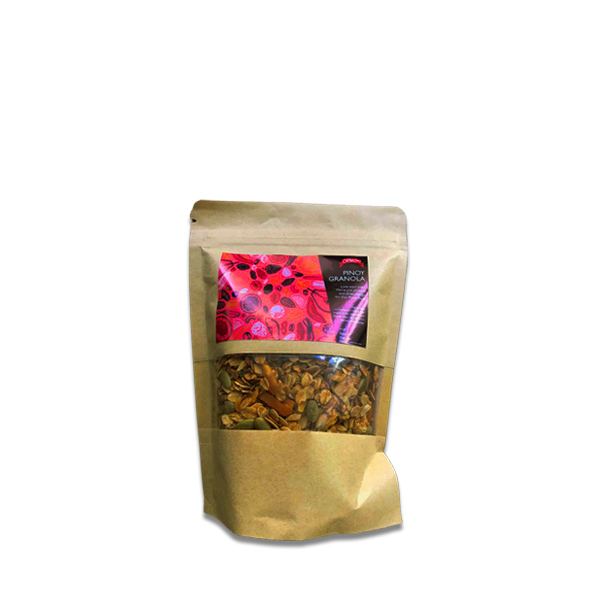
This granola from Pinkie’s Farm boasts ingredients that are proudly local—pili nuts and dried mango
Pinkie's Farm
A delight of local flavor
This granola from Pinkie’s Farm boasts ingredients that are proudly local—pili nuts and dried mango
Temporarily out of stock
The curators are restocking this item — sign up and we'll text you when it's back.
One SMS when it's restocked — no marketing.
This is a delicious and energizing granola blend of old-fashioned rolled oats, maple syrup, brown sugar, vegetable oil, salt, and pepitas. It also includes pili nuts and dried mangoes—two ingredients that are undeniably proudly Pinoy.
The pili nuts add a different layer of crunch, and a nutty flavor unique to the pili. And the dried mangoes balance it all out with a refreshing sweetness.
You can enjoy the Pinkie’s Farm Pinoy Granola on its own, as a healthy snack to munch on instead of chips, while reading, or watching TV. You can also pair it with yogurt, of course. It’s the perfect breakfast. Fold it in with a bowl of Pinkie’s Farm Full Cream Yogurt, or double down on the mango flavor by pairing it with Dalawang Milkmen Mango Greek Yogurt.
The pili is a fruit native to the Philippines, specifically in the Bicol region, in the Southern part of Luzon. It has a smooth, shiny, purplish black skin, with a greenish-yellow fibrous flesh. The flesh and skin are delicious and edible when boiled and seasoned. Once the flesh and skin are off, what is left is a notoriously hard and tough shell, within which kernels are found.
The shell is so tough to crack that not even machines can do it cleanly, ending up crushing most of the kernels in the process. The kernels can only basically be extracted manually, with a centuries-old process called “pagtilad” in Bicol. The farmers use a bolo to whack the shell in the middle at a specific and controlled force to crack it without damaging the kernel.
These kernels can be eaten raw, roasted, caramelized, or crushed and used in candies and brittle.
This is a delicious and energizing granola blend of old-fashioned rolled oats, maple syrup, brown sugar, vegetable oil, salt, and pepitas. It also includes pili nuts and dried mangoes—two ingredients that are undeniably proudly Pinoy.
The pili nuts add a different layer of crunch, and a nutty flavor unique to the pili. And the dried mangoes balance it all out with a refreshing sweetness.
You can enjoy the Pinkie’s Farm Pinoy Granola on its own, as a healthy snack to munch on instead of chips, while reading, or watching TV. You can also pair it with yogurt, of course. It’s the perfect breakfast. Fold it in with a bowl of Pinkie’s Farm Full Cream Yogurt, or double down on the mango flavor by pairing it with Dalawang Milkmen Mango Greek Yogurt.
The pili is a fruit native to the Philippines, specifically in the Bicol region, in the Southern part of Luzon. It has a smooth, shiny, purplish black skin, with a greenish-yellow fibrous flesh. The flesh and skin are delicious and edible when boiled and seasoned. Once the flesh and skin are off, what is left is a notoriously hard and tough shell, within which kernels are found.
The shell is so tough to crack that not even machines can do it cleanly, ending up crushing most of the kernels in the process. The kernels can only basically be extracted manually, with a centuries-old process called “pagtilad” in Bicol. The farmers use a bolo to whack the shell in the middle at a specific and controlled force to crack it without damaging the kernel.
These kernels can be eaten raw, roasted, caramelized, or crushed and used in candies and brittle.