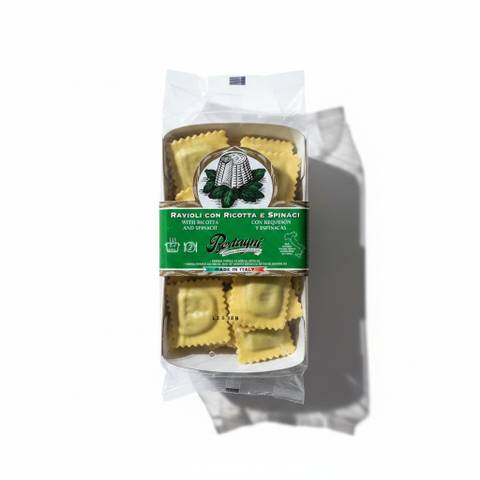
Bertagni Ravioli with Ricotta and Spinach
Emilia’s Gentle Green Pillows
PHP 809.00

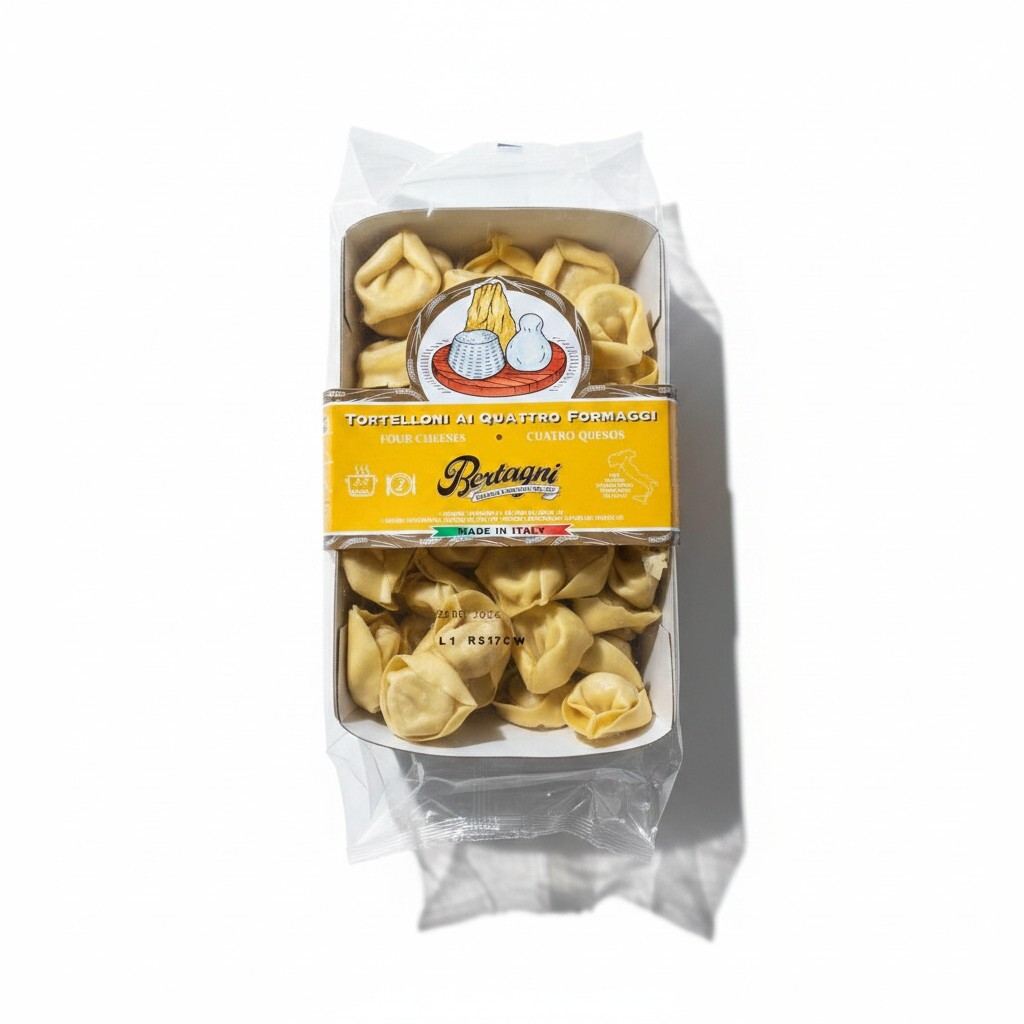
Velvet-Filled Emilia Classics
PHP 809.00
Delivery date confirmed at checkout
250G FROZEN
Most popularPHP 809.00 each
Frozen — Packed with thermal insulation & ice gel
You’re PHP 3,000.00 away from free delivery in Metro Manila
Frozen Italian tortelloni filled with four cheeses, crafted by one of Italy’s oldest stuffed pasta houses. Rich ricotta, Grana Padano PDO, mozzarella, and Parmigiano Reggiano PDO wrapped in delicate egg pasta from the culinary heartland of Emilia-Romagna.
Temperature-Controlled Delivery
Satisfaction Guarantee
Same-Day Dispatch Before 4PM
Velvet-Filled Emilia Classics
Frozen Italian tortelloni filled with four cheeses, crafted by one of Italy’s oldest stuffed pasta houses. Rich ricotta, Grana Padano PDO, mozzarella, and Parmigiano Reggiano PDO wrapped in delicate egg pasta from the culinary heartland of Emilia-Romagna.
PHP 809.00
Delivery date confirmed at checkout
250G FROZEN
Most popularPHP 809.00 each
Frozen — Packed with thermal insulation & ice gel
You’re PHP 3,000.00 away from free delivery in Metro Manila
Temperature-Controlled Delivery
Satisfaction Guarantee
Same-Day Dispatch Before 4PM
There is a particular pleasure in the first bite of good tortelloni: the resistance of thin egg pasta giving way to warm cheese that seems to unfold rather than spill. Bertagni’s Four Cheese Tortelloni carries that pleasure with old-world assurance. The pasta itself is supple and golden, made with wheat flour, durum wheat semolina, and egg in the northern Italian tradition. It cooks quickly, emerging silky and tender without heaviness.
Inside is a filling built on balance rather than brute richness. Ricotta provides softness and lactic sweetness, almost cloud-like in texture. Grana Padano PDO contributes a nutty, savory depth, while Parmigiano Reggiano PDO sharpens the edges with crystalline salinity and a faint aroma of warm hay and toasted butter. Mozzarella rounds everything out with a gentle creaminess that binds the filling into something cohesive and comforting.
What makes this tortelloni particularly satisfying is restraint. Many industrial four-cheese pastas collapse into salt and cream. Bertagni’s version remains recognizably Italian: the cheeses are distinct, the filling remains light enough to let the pasta breathe, and the entire composition avoids excess. There is a faint sweetness from the dairy, a mellow nuttiness from the aged cheeses, and a lingering buttery finish that feels elegant rather than overwhelming.
The frozen format is practical without sacrificing character. The tortelloni cooks directly from frozen in only a few minutes, making it possible to produce something deeply comforting with almost no effort. Yet it still carries traces of Emilia-Romagna’s culinary grammar — egg pasta, careful fillings, balance, and respect for texture.
This is the kind of pasta that welcomes simplicity. Butter and sage are enough. A spoonful of cream and black pepper can transform it into winter food. A little lemon zest lifts the richness unexpectedly well. Pear, walnut, and nutmeg all feel naturally at home beside it. The cheeses themselves already contain complexity; the best sauces understand when to step aside.
Bertagni’s long history matters here. The company was founded in Bologna in 1882 by Luigi Bertagni and is often described as the oldest producer of stuffed pasta in Italy. Long before refrigeration and industrial logistics became commonplace, the Bertagni brothers were already experimenting with ways to preserve and package fresh tortellini so they could travel beyond Bologna. Their products won medals at international fairs in Paris, Chicago, and St. Louis during the late nineteenth and early twentieth centuries. More than a century later, that same culture of filled pasta survives in products like these tortelloni: practical food with the memory of craftsmanship still intact.
The richness of four-cheese tortelloni invites contrast: acidity, herbs, nuts, bitterness, or sweetness. It can move easily between rustic comfort and refined dinner-table elegance.
Cook directly from frozen in generously salted boiling water. The tortelloni is delicate; avoid aggressive stirring. Once they float and become tender, transfer gently with a slotted spoon rather than draining harshly in a colander.
Bertagni’s story begins in Bologna in 1882, at a time when stuffed pasta was still deeply local and intensely artisanal. Luigi Bertagni and his brothers Ferdinando and Oreste produced fresh tortellini in a small workshop while searching for ways to preserve them longer — an important challenge in an era before modern refrigeration. Their work helped transform tortellini from something consumed close to home into a product that could travel.
The company rapidly gained recognition. Bertagni pastas received awards at international exhibitions, including the Paris World’s Fair of 1889, the Chicago Fair of 1894, and the St. Louis World’s Fair in 1904. Those medals mattered enormously at the time; they signaled that a regional specialty from Emilia-Romagna had become an ambassador for Italian food abroad.
Bologna itself remains central to understanding this pasta. Emilia-Romagna is one of Italy’s great gastronomic regions: the homeland of Parmigiano Reggiano, mortadella, traditional balsamic vinegar, ragù, and some of the country’s most refined egg pasta traditions. Tortellini and tortelloni occupy an almost mythic place there. Legends claim tortellini was inspired by the navel of Venus after an innkeeper glimpsed the goddess through a keyhole. Ridiculous perhaps, but very Italian in the way food, sensuality, and storytelling become inseparable.
Tortelloni differs from tortellini in both scale and spirit. Larger in size and traditionally filled with ricotta and cheese rather than meat, tortelloni feels more domestic, more generous, perhaps more forgiving. Four-cheese versions such as this one continue that lineage while adapting it for modern life: freezer-friendly, fast to prepare, yet still grounded in regional identity.
There is something quietly moving about that continuity. A product designed for convenience still carries echoes of nineteenth-century Bologna, of workshops dusted in flour, of egg dough rolled thin by hand, of cheeses aging in cool northern cellars. Food like this reminds you that tradition does not survive by remaining frozen in time. It survives because people keep cooking it.
Keep frozen at or below -18°C. Do not refreeze once thawed. Cook directly from frozen for best texture and integrity. Once opened, keep tightly sealed and consume promptly. Avoid overcooking, as the delicate pasta may split and release the cheese filling.
There is a particular pleasure in the first bite of good tortelloni: the resistance of thin egg pasta giving way to warm cheese that seems to unfold rather than spill. Bertagni’s Four Cheese Tortelloni carries that pleasure with old-world assurance. The pasta itself is supple and golden, made with wheat flour, durum wheat semolina, and egg in the northern Italian tradition. It cooks quickly, emerging silky and tender without heaviness.
Inside is a filling built on balance rather than brute richness. Ricotta provides softness and lactic sweetness, almost cloud-like in texture. Grana Padano PDO contributes a nutty, savory depth, while Parmigiano Reggiano PDO sharpens the edges with crystalline salinity and a faint aroma of warm hay and toasted butter. Mozzarella rounds everything out with a gentle creaminess that binds the filling into something cohesive and comforting.
What makes this tortelloni particularly satisfying is restraint. Many industrial four-cheese pastas collapse into salt and cream. Bertagni’s version remains recognizably Italian: the cheeses are distinct, the filling remains light enough to let the pasta breathe, and the entire composition avoids excess. There is a faint sweetness from the dairy, a mellow nuttiness from the aged cheeses, and a lingering buttery finish that feels elegant rather than overwhelming.
The frozen format is practical without sacrificing character. The tortelloni cooks directly from frozen in only a few minutes, making it possible to produce something deeply comforting with almost no effort. Yet it still carries traces of Emilia-Romagna’s culinary grammar — egg pasta, careful fillings, balance, and respect for texture.
This is the kind of pasta that welcomes simplicity. Butter and sage are enough. A spoonful of cream and black pepper can transform it into winter food. A little lemon zest lifts the richness unexpectedly well. Pear, walnut, and nutmeg all feel naturally at home beside it. The cheeses themselves already contain complexity; the best sauces understand when to step aside.
Bertagni’s long history matters here. The company was founded in Bologna in 1882 by Luigi Bertagni and is often described as the oldest producer of stuffed pasta in Italy. Long before refrigeration and industrial logistics became commonplace, the Bertagni brothers were already experimenting with ways to preserve and package fresh tortellini so they could travel beyond Bologna. Their products won medals at international fairs in Paris, Chicago, and St. Louis during the late nineteenth and early twentieth centuries. More than a century later, that same culture of filled pasta survives in products like these tortelloni: practical food with the memory of craftsmanship still intact.
The richness of four-cheese tortelloni invites contrast: acidity, herbs, nuts, bitterness, or sweetness. It can move easily between rustic comfort and refined dinner-table elegance.
Cook directly from frozen in generously salted boiling water. The tortelloni is delicate; avoid aggressive stirring. Once they float and become tender, transfer gently with a slotted spoon rather than draining harshly in a colander.
Bertagni’s story begins in Bologna in 1882, at a time when stuffed pasta was still deeply local and intensely artisanal. Luigi Bertagni and his brothers Ferdinando and Oreste produced fresh tortellini in a small workshop while searching for ways to preserve them longer — an important challenge in an era before modern refrigeration. Their work helped transform tortellini from something consumed close to home into a product that could travel.
The company rapidly gained recognition. Bertagni pastas received awards at international exhibitions, including the Paris World’s Fair of 1889, the Chicago Fair of 1894, and the St. Louis World’s Fair in 1904. Those medals mattered enormously at the time; they signaled that a regional specialty from Emilia-Romagna had become an ambassador for Italian food abroad.
Bologna itself remains central to understanding this pasta. Emilia-Romagna is one of Italy’s great gastronomic regions: the homeland of Parmigiano Reggiano, mortadella, traditional balsamic vinegar, ragù, and some of the country’s most refined egg pasta traditions. Tortellini and tortelloni occupy an almost mythic place there. Legends claim tortellini was inspired by the navel of Venus after an innkeeper glimpsed the goddess through a keyhole. Ridiculous perhaps, but very Italian in the way food, sensuality, and storytelling become inseparable.
Tortelloni differs from tortellini in both scale and spirit. Larger in size and traditionally filled with ricotta and cheese rather than meat, tortelloni feels more domestic, more generous, perhaps more forgiving. Four-cheese versions such as this one continue that lineage while adapting it for modern life: freezer-friendly, fast to prepare, yet still grounded in regional identity.
There is something quietly moving about that continuity. A product designed for convenience still carries echoes of nineteenth-century Bologna, of workshops dusted in flour, of egg dough rolled thin by hand, of cheeses aging in cool northern cellars. Food like this reminds you that tradition does not survive by remaining frozen in time. It survives because people keep cooking it.
Keep frozen at or below -18°C. Do not refreeze once thawed. Cook directly from frozen for best texture and integrity. Once opened, keep tightly sealed and consume promptly. Avoid overcooking, as the delicate pasta may split and release the cheese filling.
Curated Selection