

The Duck’s Digest
Table Butter vs Baking Butter: How to Choose
A practical guide to choosing for your table
The right butter depends on how you plan to use it. A flavoured butter that makes a slice of bread memorable may not be the right substitute in a cake recipe. Start with salt level, added ingredients and format.
Butter for bread and the table
When the butter is part of the tasting experience, choose by flavour and salt. Try a plain butter and a salted one on the same bread before exploring seaweed, yuzu, pepper or other added flavours. Serve a small portion and follow the pack's storage instructions.
Compare the brand and flavour choices in French butters. Read the individual product's salt information rather than assuming all salted butters have the same level.
Butter for cakes, biscuits and ordinary recipes
Follow the butter specified in the recipe. Doux means unsalted, which lets you control the salt added separately. A recipe written for salted butter should be treated differently. A flavoured butter introduces other ingredients and can change the intended result.
For a plain unsalted option, compare Bordier Doux. Check the pack weight against the amount your recipe needs.
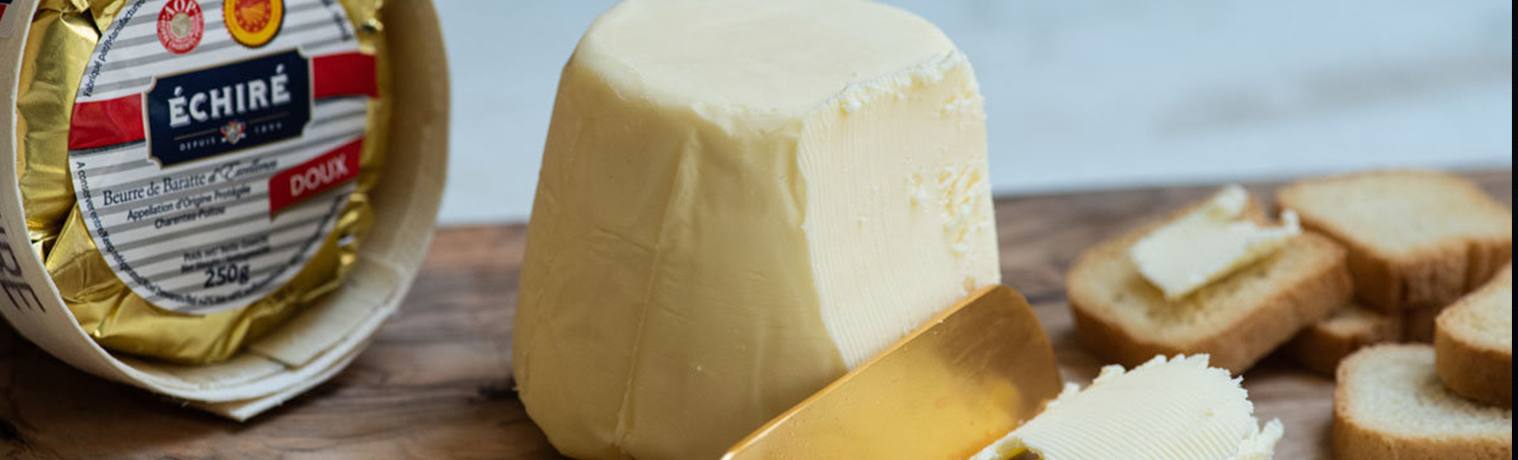
When choosing Échiré butter, check the selected salted or unsalted variant and format before ordering.
Butter for laminated pastry
Croissants and other laminated pastries involve a different handling process from mixing butter into a cake. A specialist pastry format is designed for that practical use. A small table pack should not be assumed to have the same handling characteristics.
Compare the product information for Montaigu pastry butter in a frozen sheet and follow the handling instructions for the product and your recipe.
Finishing butter, ghee and substitutes
Flavoured butter can finish a dish without needing several separate seasonings. Add it according to the effect you want, taking its salt and other ingredients into account. Ghee and clarified butter have a different composition from ordinary butter and should not be treated as automatic replacements in baking recipes.
A simple checklist before buying
Check whether the recipe calls for salted or unsalted butter, how much you need, whether a specialist format is required and how the product should be stored. Choose for the recipe first, then compare producer and price.
Browse butter for baking for recipe options, or return to the wider French butter selection for table and finishing flavours.