
Dammann Frères Week-end à Paris Oolong Tea
Floral, Fruity, Effortlessly Parisian
PHP 1,769.00


PHP 1,519.00
Delivery date confirmed at checkout
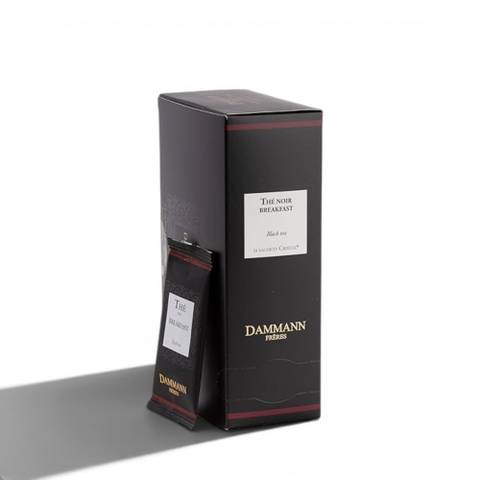
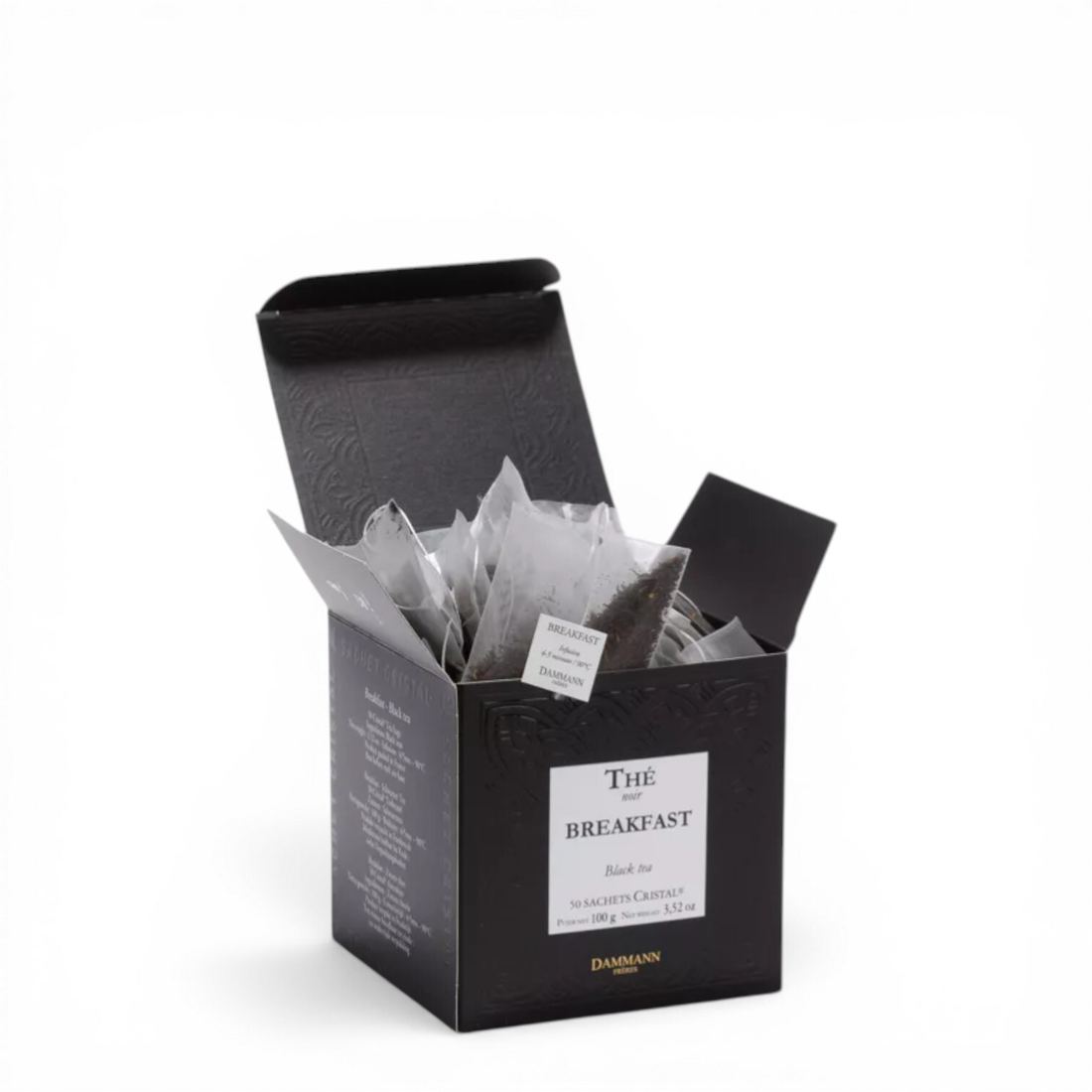
50 Cristal® Sachets — 100g
PHP 1,519.00 each
You’re PHP 3,000.00 away from free delivery in Metro Manila
A masterwork of blending that transforms the bright energies of Ceylon, Darjeeling, and Assam into a single harmonious wake-up call.
Temperature-Controlled Delivery
Satisfaction Guarantee
Same-Day Dispatch Before 4PM
A masterwork of blending that transforms the bright energies of Ceylon, Darjeeling, and Assam into a single harmonious wake-up call.
PHP 1,519.00
Delivery date confirmed at checkout
50 Cristal® Sachets — 100g
PHP 1,519.00 each
You’re PHP 3,000.00 away from free delivery in Metro Manila
Temperature-Controlled Delivery
Satisfaction Guarantee
Same-Day Dispatch Before 4PM
There exists a particular poetry in the breakfast blend—the kind of alchemy that separates masterful tea merchants from merely competent ones. The Dammann Frères Breakfast tea embodies three centuries of accumulated knowledge, distilled into a cup that respects the morning's ambitions while asking nothing unreasonable of the still-waking palate.
The composition reveals itself in layers. Ceylon forms the foundation, contributing that frank woody character that seems to clear the corridors of your mind with each sip. There is no apology in Ceylon—it arrives as a distinguished elder who has navigated centuries of tea gardens at varying altitudes and knows exactly what it brings to the table. The liqueur settles into an inviting amber, the kind of hue that promises substance without menace, and delivers woody notes that some might describe as cocoa-touched, a subtle earthiness that prevents the cup from becoming merely caffeinated water.
Darjeeling enters here as the refinement—the whisper of fruit that elevates the whole project. This isn't aggressive fruitiness; it's the suggestion of ripe peach and almond found in the second flush harvests, the delicate floral undertones that Darjeeling carries like a silk scarf. In combination with Ceylon's woodiness, the Darjeeling creates a kind of brightness, a top note that catches on the palate and lingers pleasantly rather than assertively.
Assam arrives as the third partner, the one that brings body and malt. Assam's full-bodied character, its spicy undertones and inherent richness, transforms this from a light morning sip into something with actual substance—a tea that nourishes rather than merely caffemates. The malty quality rounds out the composition; it's why this tea doesn't feel austere or demanding, why it welcomes—indeed, benefits from—a splash of milk or cream.
The brilliance of this particular blend lies in what English tea merchants have understood for centuries: the purpose of breakfast tea is neither to showcase a single origin nor to assault the palate. It is to provide companionship, clarity, and comfort in balanced measure. It is the tea equivalent of a well-tailored suit—purposeful, elegant, reliable, with nothing extraneous.
The Cristal® sachets deserve mention here. Unlike conventional tea bags that compress leaves into dust and restrict their expansion, these mesh sachets allow whole leaves to unfurl completely, to oxygenate properly, to release their flavor compounds with the generosity they deserve. You'll notice the difference immediately: a cleaner, brighter cup than you might expect from bagged tea. The craftsmanship that went into developing this proprietary sachet technology—by a company now operating from a 30,000 square meter facility in Dreux with 190 artisans dedicated to the proposition that tea matters—comes through in every sip.
When you brew this tea, the leaves perform a dance. Watch them open in the warm water, releasing clouds of amber that transform your cup into something alive. That moment, perhaps five minutes after pouring, when you lift the sachet to taste—that's when you understand why Dammann Frères deserves the Entreprise du Patrimoine Vivant designation, the official French recognition of exceptional artisanal craftsmanship. This isn't industrial breakfast tea. This is the morning ritual refined to its essential elements.
The finish carries through with grace. There's no bitterness, no harshness. Instead, there's a lingering warmth, a gentle woody echo, and that peculiar sense of clarity that comes from drinking truly well-made tea. Your palate doesn't feel assaulted or exhausted; it feels awakened and prepared for whatever the day demands.
The breakfast blend's tripartite nature makes it genuinely versatile across the morning meal:
The English Breakfast Full Experience: Pair this with the traditional full English—eggs, bacon, sausage, baked beans, mushrooms, grilled tomato. The Ceylon's woodiness cuts through the richness of the meat; the Assam's body stands up to the assertive flavors without being overwhelmed; the Darjeeling's floral notes provide a counterpoint to the savory intensity.
Pastries and Baked Goods: Scones with clotted cream and jam, croissants, pain au chocolat. The tea's slight sweetness complements butter and sugar without fighting them.
Light Eggs Preparations: Soft-boiled eggs with soldiers (toast strips), poached eggs on English muffins, shakshuka. The tea's brightness pairs well with the delicate yolk.
Fruit and Cheese: Fresh berries, citrus, and mild cheeses like fresh mozzarella or young cheddar benefit from the tea's clarifying properties.
Toast and Preserves: Simple buttered toast with marmalade, jam, or honey. The Ceylon's woody undertones enhance fruit preserves.
Light Sandwiches: A proper breakfast sandwich—eggs, cheese, and bacon on toast—becomes a moment of refinement when accompanied by this tea.
The rule: if it belongs on a proper breakfast table, this tea will enhance it rather than compete with it. That's the mark of a well-considered blend.
The story of Dammann Frères breakfast tea cannot be told without understanding the improbable journey of French tea culture itself. In 1692, King Louis XIV granted Sire Damame the exclusive royal privilege to sell tea in France—an astonishing monopoly that positioned tea as a luxury item worthy of royal decree at a moment when European society was barely aware the beverage existed. For more than two centuries, tea in France was associated with aristocracy, with refinement, with the particular aesthetic that only those with access to Asian trade routes could appreciate.
The family's commitment to tea survived the Revolution (no small feat for anything bearing royal connections) and persisted through the nineteenth century. But the company truly began to take its modern shape in 1925, when brothers Robert and Pierre Dammann established "Dammann Frères" in Paris, positioning themselves not as purveyors to the elite but as artisans committed to consistent quality and creative blending.
By 1932, they had achieved official supplier status to the Compagnie Générale Transatlantique—the great transatlantic shipping company whose first-class passengers expected nothing less than excellence. To serve the tea drinkers aboard those legendary ships, Dammann Frères had to understand not merely good tea, but perfect tea—the kind that comforted travellers, that provided ritual and normalcy in the middle of the ocean, that represented French civilization at sea.
The company continued evolving. When Jean Jumeau-Lafond took over in the 1950s, he inherited a solid operation but transformed it into something legendary. His creation of "Goût Russe Douchka"—inspired by his Russian wife Véra's habit of adding orange to her Earl Grey—was revolutionary. He created the first modern flavored tea, a product that proved tea blending could honor tradition while embracing innovation. That single creation demonstrated that tea wasn't a static artifact but a living craft, capable of evolution.
Today, from their facility in Dreux, with 190 employees and presence in more than 70 countries, Dammann Frères produces more than 500 tea references. Yet their breakfast blend remains one of their essential offerings—proof that in seeking constantly for innovation, they have never abandoned the fundamentals. This tea reflects not experimental indulgence but the accumulated wisdom of three centuries of merchants who understood that breakfast deserves nothing less than perfection.
Store the sealed box in a cool, dry place away from direct sunlight, heat sources, and strong odors. Tea naturally absorbs ambient scents and humidity; maintain storage temperature between 15°C and 20°C for optimal preservation. Keep the box tightly closed between uses. Properly stored, this tea maintains peak flavor and aroma for approximately 18-24 months from purchase. Once a sachet is removed, reseal the box immediately. For those who prefer to decant sachets, store in an airtight glass container away from light.
There exists a particular poetry in the breakfast blend—the kind of alchemy that separates masterful tea merchants from merely competent ones. The Dammann Frères Breakfast tea embodies three centuries of accumulated knowledge, distilled into a cup that respects the morning's ambitions while asking nothing unreasonable of the still-waking palate.
The composition reveals itself in layers. Ceylon forms the foundation, contributing that frank woody character that seems to clear the corridors of your mind with each sip. There is no apology in Ceylon—it arrives as a distinguished elder who has navigated centuries of tea gardens at varying altitudes and knows exactly what it brings to the table. The liqueur settles into an inviting amber, the kind of hue that promises substance without menace, and delivers woody notes that some might describe as cocoa-touched, a subtle earthiness that prevents the cup from becoming merely caffeinated water.
Darjeeling enters here as the refinement—the whisper of fruit that elevates the whole project. This isn't aggressive fruitiness; it's the suggestion of ripe peach and almond found in the second flush harvests, the delicate floral undertones that Darjeeling carries like a silk scarf. In combination with Ceylon's woodiness, the Darjeeling creates a kind of brightness, a top note that catches on the palate and lingers pleasantly rather than assertively.
Assam arrives as the third partner, the one that brings body and malt. Assam's full-bodied character, its spicy undertones and inherent richness, transforms this from a light morning sip into something with actual substance—a tea that nourishes rather than merely caffemates. The malty quality rounds out the composition; it's why this tea doesn't feel austere or demanding, why it welcomes—indeed, benefits from—a splash of milk or cream.
The brilliance of this particular blend lies in what English tea merchants have understood for centuries: the purpose of breakfast tea is neither to showcase a single origin nor to assault the palate. It is to provide companionship, clarity, and comfort in balanced measure. It is the tea equivalent of a well-tailored suit—purposeful, elegant, reliable, with nothing extraneous.
The Cristal® sachets deserve mention here. Unlike conventional tea bags that compress leaves into dust and restrict their expansion, these mesh sachets allow whole leaves to unfurl completely, to oxygenate properly, to release their flavor compounds with the generosity they deserve. You'll notice the difference immediately: a cleaner, brighter cup than you might expect from bagged tea. The craftsmanship that went into developing this proprietary sachet technology—by a company now operating from a 30,000 square meter facility in Dreux with 190 artisans dedicated to the proposition that tea matters—comes through in every sip.
When you brew this tea, the leaves perform a dance. Watch them open in the warm water, releasing clouds of amber that transform your cup into something alive. That moment, perhaps five minutes after pouring, when you lift the sachet to taste—that's when you understand why Dammann Frères deserves the Entreprise du Patrimoine Vivant designation, the official French recognition of exceptional artisanal craftsmanship. This isn't industrial breakfast tea. This is the morning ritual refined to its essential elements.
The finish carries through with grace. There's no bitterness, no harshness. Instead, there's a lingering warmth, a gentle woody echo, and that peculiar sense of clarity that comes from drinking truly well-made tea. Your palate doesn't feel assaulted or exhausted; it feels awakened and prepared for whatever the day demands.
The breakfast blend's tripartite nature makes it genuinely versatile across the morning meal:
The English Breakfast Full Experience: Pair this with the traditional full English—eggs, bacon, sausage, baked beans, mushrooms, grilled tomato. The Ceylon's woodiness cuts through the richness of the meat; the Assam's body stands up to the assertive flavors without being overwhelmed; the Darjeeling's floral notes provide a counterpoint to the savory intensity.
Pastries and Baked Goods: Scones with clotted cream and jam, croissants, pain au chocolat. The tea's slight sweetness complements butter and sugar without fighting them.
Light Eggs Preparations: Soft-boiled eggs with soldiers (toast strips), poached eggs on English muffins, shakshuka. The tea's brightness pairs well with the delicate yolk.
Fruit and Cheese: Fresh berries, citrus, and mild cheeses like fresh mozzarella or young cheddar benefit from the tea's clarifying properties.
Toast and Preserves: Simple buttered toast with marmalade, jam, or honey. The Ceylon's woody undertones enhance fruit preserves.
Light Sandwiches: A proper breakfast sandwich—eggs, cheese, and bacon on toast—becomes a moment of refinement when accompanied by this tea.
The rule: if it belongs on a proper breakfast table, this tea will enhance it rather than compete with it. That's the mark of a well-considered blend.
The story of Dammann Frères breakfast tea cannot be told without understanding the improbable journey of French tea culture itself. In 1692, King Louis XIV granted Sire Damame the exclusive royal privilege to sell tea in France—an astonishing monopoly that positioned tea as a luxury item worthy of royal decree at a moment when European society was barely aware the beverage existed. For more than two centuries, tea in France was associated with aristocracy, with refinement, with the particular aesthetic that only those with access to Asian trade routes could appreciate.
The family's commitment to tea survived the Revolution (no small feat for anything bearing royal connections) and persisted through the nineteenth century. But the company truly began to take its modern shape in 1925, when brothers Robert and Pierre Dammann established "Dammann Frères" in Paris, positioning themselves not as purveyors to the elite but as artisans committed to consistent quality and creative blending.
By 1932, they had achieved official supplier status to the Compagnie Générale Transatlantique—the great transatlantic shipping company whose first-class passengers expected nothing less than excellence. To serve the tea drinkers aboard those legendary ships, Dammann Frères had to understand not merely good tea, but perfect tea—the kind that comforted travellers, that provided ritual and normalcy in the middle of the ocean, that represented French civilization at sea.
The company continued evolving. When Jean Jumeau-Lafond took over in the 1950s, he inherited a solid operation but transformed it into something legendary. His creation of "Goût Russe Douchka"—inspired by his Russian wife Véra's habit of adding orange to her Earl Grey—was revolutionary. He created the first modern flavored tea, a product that proved tea blending could honor tradition while embracing innovation. That single creation demonstrated that tea wasn't a static artifact but a living craft, capable of evolution.
Today, from their facility in Dreux, with 190 employees and presence in more than 70 countries, Dammann Frères produces more than 500 tea references. Yet their breakfast blend remains one of their essential offerings—proof that in seeking constantly for innovation, they have never abandoned the fundamentals. This tea reflects not experimental indulgence but the accumulated wisdom of three centuries of merchants who understood that breakfast deserves nothing less than perfection.
Store the sealed box in a cool, dry place away from direct sunlight, heat sources, and strong odors. Tea naturally absorbs ambient scents and humidity; maintain storage temperature between 15°C and 20°C for optimal preservation. Keep the box tightly closed between uses. Properly stored, this tea maintains peak flavor and aroma for approximately 18-24 months from purchase. Once a sachet is removed, reseal the box immediately. For those who prefer to decant sachets, store in an airtight glass container away from light.
Curated Selection