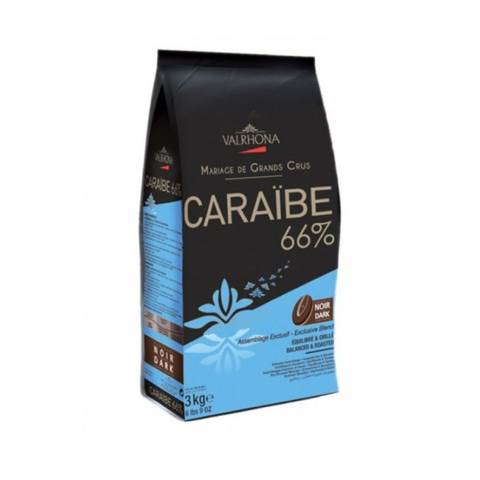
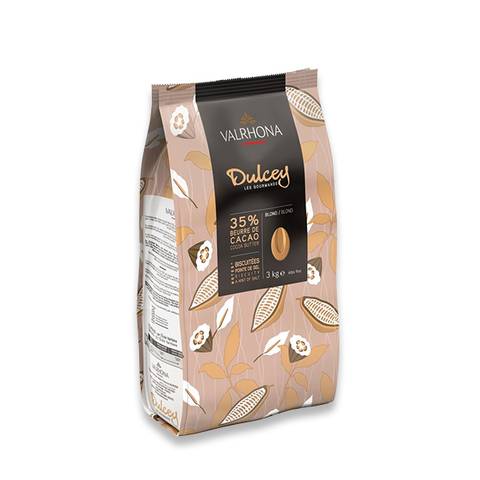
Valrhona Dulcey Blond 35% Beans
A happy accident
PHP 14,280.00

PHP 15,300.00
Delivery date confirmed at checkout
3kg bag
Most popularPHP 15,300.00 each
Chilled — Packed with thermal insulation & ice gel
You’re PHP 3,000.00 away from free delivery in Metro Manila
Temperature-Controlled Delivery
Satisfaction Guarantee
Same-Day Dispatch Before 4PM
PHP 15,300.00
Delivery date confirmed at checkout
3kg bag
Most popularPHP 15,300.00 each
Chilled — Packed with thermal insulation & ice gel
You’re PHP 3,000.00 away from free delivery in Metro Manila
Temperature-Controlled Delivery
Satisfaction Guarantee
Same-Day Dispatch Before 4PM
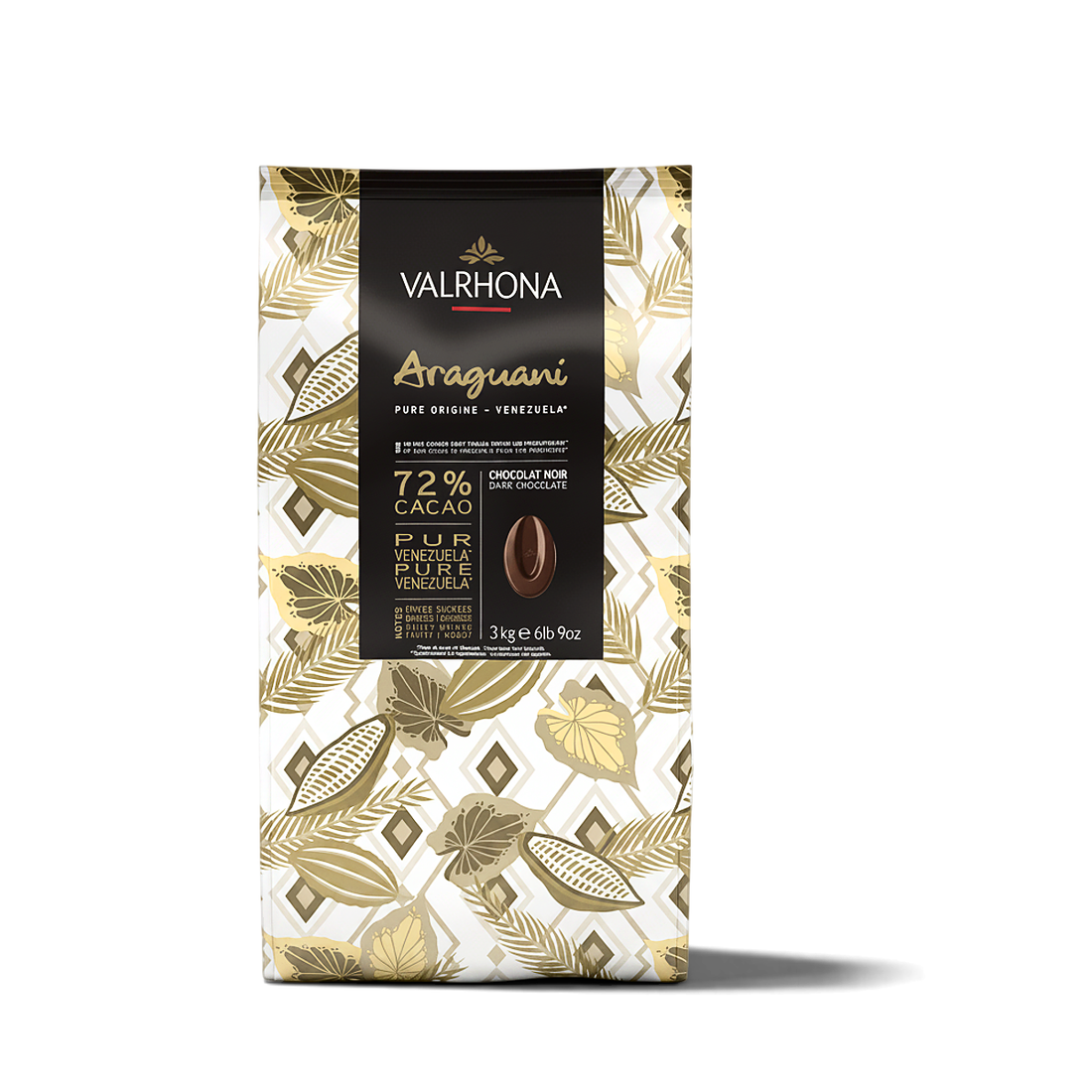
Araguani is a dark chocolate with a broad, confident presence. Valrhona describes it as full-bodied, led by sweet spice and wood, with vanilla and a fine edge of bitterness. At 72% cocoa, it has enough concentration to remain clear inside cream-based preparations, yet its aromatic shape is more nuanced than a bluntly bitter chocolate. In ganache, the woody and spice notes make a natural partner for coffee, toasted nuts, and warm bakery spices. In mousse, the chocolate keeps its character even after the formula is lightened with dairy and air. Its fèves melt evenly and support precise scaling in professional production. Valrhona recommends Araguani across coating, moulding, bars, mousse, crémeux, ganache, ice cream, and sorbet, making it one of the more versatile single-origin choices for a bakery that wants both technical range and a strong flavour identity. The finish is persistent and cocoa-rich, giving layered desserts a clear dark-chocolate anchor.
Liquorice and restrained olive accents are also among Valrhona’s suggested pairings for chefs seeking more unusual savoury-bitter contrast.
Araguani comes from cocoa grown in Venezuela’s Sur del Lago region, an area Valrhona values for the richness of its terroir and the complexity it brings to the chocolate. The name refers both to the Araguaney, an emblematic Venezuelan tree, and to the Guarani. Valrhona’s work with Venezuelan cocoa goes back to the 1990s and includes efforts to preserve the genetic diversity of historic varieties. Its current partner, Cacao San José, is a family company that has produced cacao since 1830 and grows fine, woody Criollo cocoa. This origin story is not merely decorative: it explains why Araguani behaves so well as a signature flavour. In the hands of a baker, it can turn a familiar mousse, tart, or ganache into a dessert with a distinctly Venezuelan aromatic character.
Store tightly sealed in a cool, dry, odour-free place, protected from light, moisture, and heat. If refrigeration is necessary in warm conditions, keep the bag sealed and allow it to return gradually to room temperature before opening to prevent condensation. The producer notes possible traces of nuts, milk and egg proteins, and gluten.
Araguani is a dark chocolate with a broad, confident presence. Valrhona describes it as full-bodied, led by sweet spice and wood, with vanilla and a fine edge of bitterness. At 72% cocoa, it has enough concentration to remain clear inside cream-based preparations, yet its aromatic shape is more nuanced than a bluntly bitter chocolate. In ganache, the woody and spice notes make a natural partner for coffee, toasted nuts, and warm bakery spices. In mousse, the chocolate keeps its character even after the formula is lightened with dairy and air. Its fèves melt evenly and support precise scaling in professional production. Valrhona recommends Araguani across coating, moulding, bars, mousse, crémeux, ganache, ice cream, and sorbet, making it one of the more versatile single-origin choices for a bakery that wants both technical range and a strong flavour identity. The finish is persistent and cocoa-rich, giving layered desserts a clear dark-chocolate anchor.
Liquorice and restrained olive accents are also among Valrhona’s suggested pairings for chefs seeking more unusual savoury-bitter contrast.
Araguani comes from cocoa grown in Venezuela’s Sur del Lago region, an area Valrhona values for the richness of its terroir and the complexity it brings to the chocolate. The name refers both to the Araguaney, an emblematic Venezuelan tree, and to the Guarani. Valrhona’s work with Venezuelan cocoa goes back to the 1990s and includes efforts to preserve the genetic diversity of historic varieties. Its current partner, Cacao San José, is a family company that has produced cacao since 1830 and grows fine, woody Criollo cocoa. This origin story is not merely decorative: it explains why Araguani behaves so well as a signature flavour. In the hands of a baker, it can turn a familiar mousse, tart, or ganache into a dessert with a distinctly Venezuelan aromatic character.
Store tightly sealed in a cool, dry, odour-free place, protected from light, moisture, and heat. If refrigeration is necessary in warm conditions, keep the bag sealed and allow it to return gradually to room temperature before opening to prevent condensation. The producer notes possible traces of nuts, milk and egg proteins, and gluten.
Curated Selection