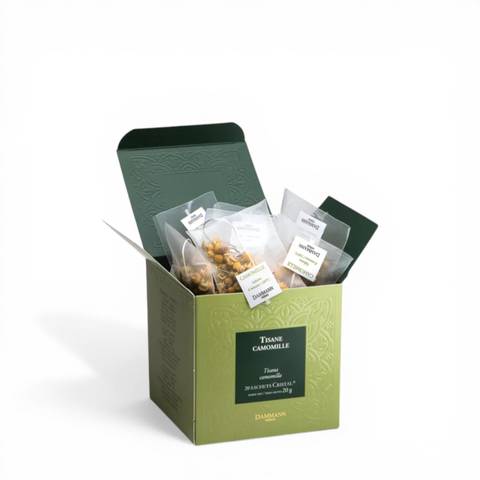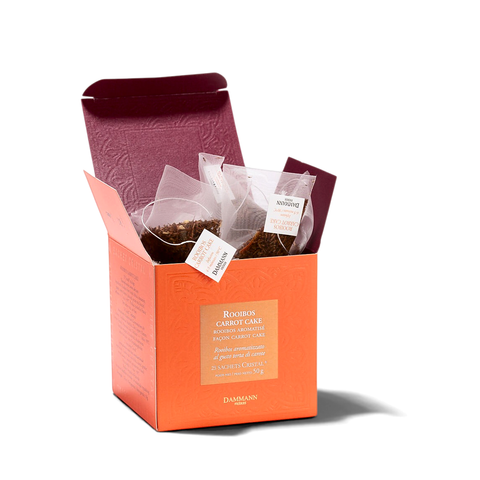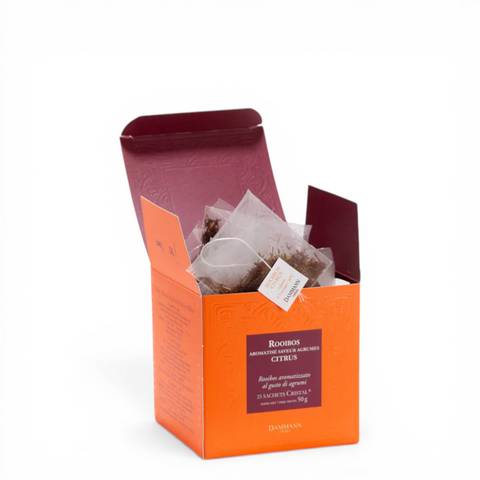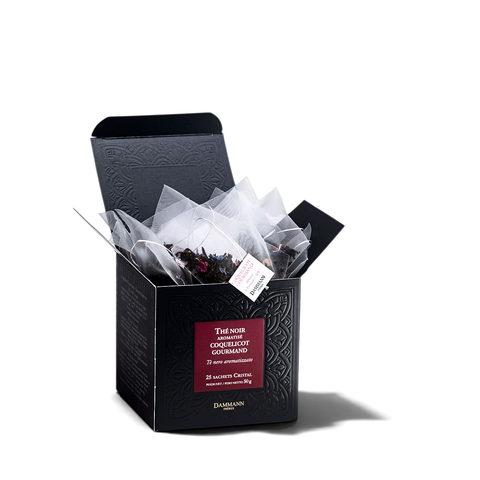
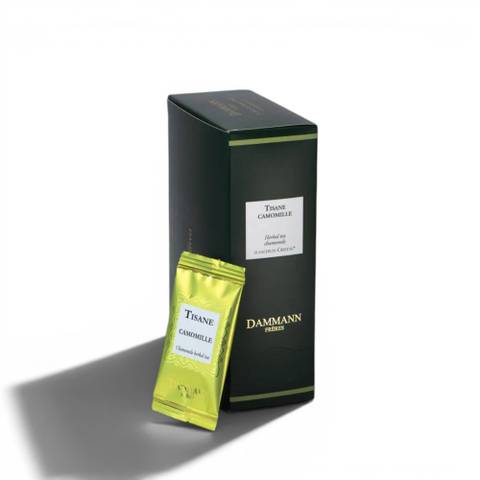
Dammann Frères Enveloped Tea Bags - Chamomile
A Gentle Floral Pause
PHP 829.00

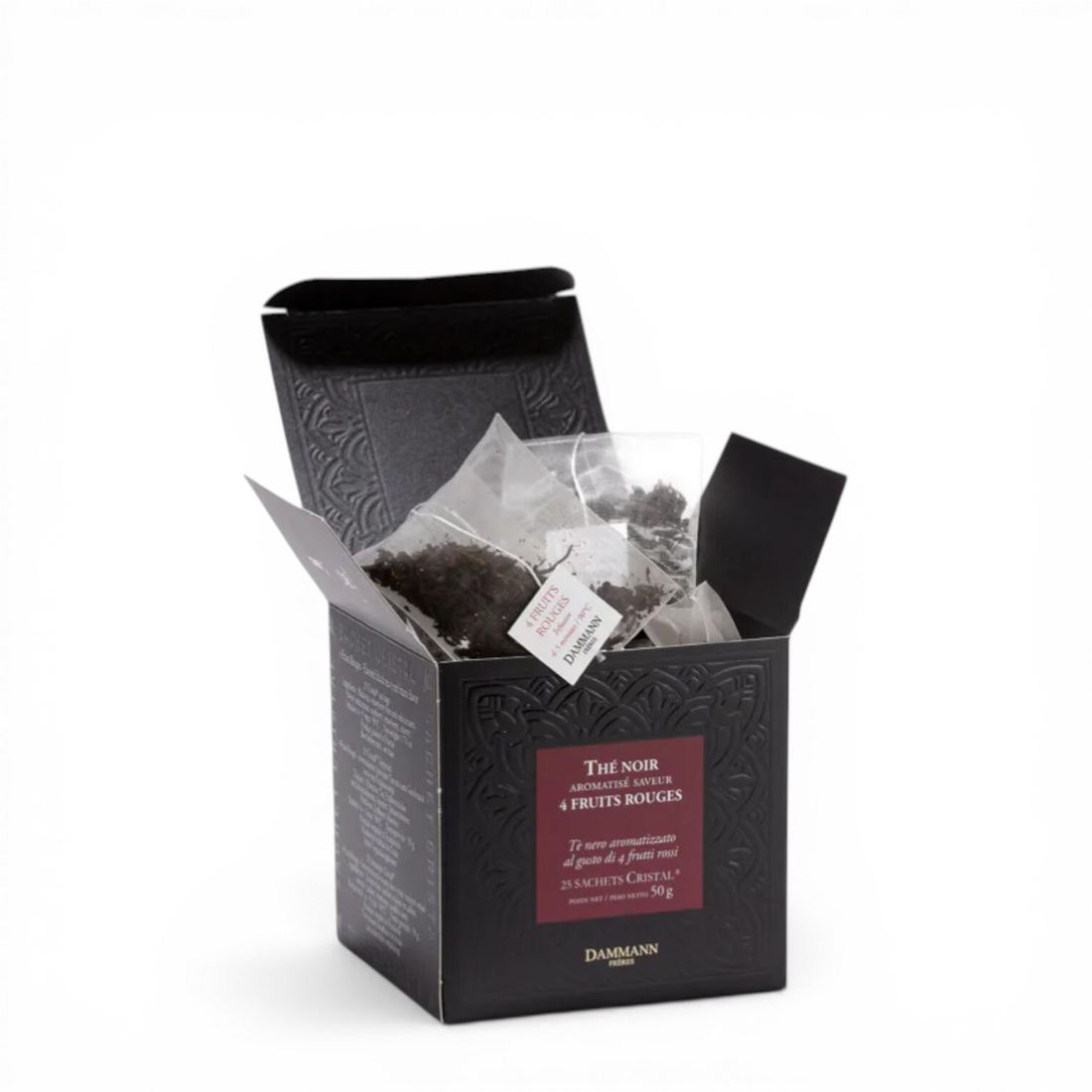

PHP 819.00
Delivery date confirmed at checkout
25 Cristal® Sachets — 50g
Most popularPHP 819.00 each
You’re PHP 3,000.00 away from free delivery in Metro Manila
A vibrant black tea infused with the essence of four red fruits—strawberry, raspberry, cherry, and redcurrant.
Temperature-Controlled Delivery
Satisfaction Guarantee
Same-Day Dispatch Before 4PM
A vibrant black tea infused with the essence of four red fruits—strawberry, raspberry, cherry, and redcurrant.
PHP 819.00
Delivery date confirmed at checkout
25 Cristal® Sachets — 50g
Most popularPHP 819.00 each
You’re PHP 3,000.00 away from free delivery in Metro Manila
Temperature-Controlled Delivery
Satisfaction Guarantee
Same-Day Dispatch Before 4PM
The moment hot water meets the Cristal® sachet, the cup fills with the perfume of a Parisian fruit stand in summer—honeyed strawberry notes unfurl alongside the delicate tartness of redcurrant. The Ceylon and China tea base forms the backbone of this composition, neither overwhelming nor retreating; rather, it acts as a sophisticated vessel for the four red fruits that drift through each sip like silk scarves.
What distinguishes Dammann Frères' interpretation from lesser berry blends is the precision of execution. The strawberry notes arrive first, soft and almost creamy on the palate, followed by the sharper geometry of raspberry—that characteristic note that catches the back of the throat with its bright acidity. The cherry sweetens the middle notes, adding depth and body, while the redcurrant provides the final flourish: a whisper of tartness that prevents the blend from becoming saccharine. This is jam without being jammy, fruit without being artificial.
The texture is profound and rich, coating the palate with a velvety mouthfeel that lingers well after the liquid has been swallowed. The tea's craftsmanship is evident in how the natural flavors have been calibrated—neither the fruit nor the tea dominates. At Dammann Frères' 30,000 m² facility in Dreux, where 190 employees master "all tea trades from leaf to cup," this balance represents decades of refinement. The whole leaves, allowed to fully unfurl through the proprietary Cristal® mesh sachet, release their character gradually across a series of infusions, each cup slightly different from the last—a quality that speaks to the authenticity of the blend.
This is not a fruit tea in the way that casual drinkers might imagine. It does not taste of artificial flavoring or cheap fruit dust. Instead, it evokes the memory of a perfect summer afternoon, when berries are at their peak and their flavor is most honest. The blend carries whispers of terroir from its component parts: Ceylon's bright character, China's subtle complexity, and the specific ripeness that only red fruits achieve when conditions align perfectly.
Four Fruits Rouges transforms into multiple characters depending on its accompaniment, making it one of the most versatile teas in the Dammann portfolio:
Patisserie and Delicate Sweets:
Chocolate Pairings:
Light Savory Options:
Iced and Seasonal:
In the Cocktail Hour:
In 1925, when brothers Robert and Pierre Dammann established their house in Paris, they inherited a royal privilege granted by King Louis XIV to Sire Damame in 1692—the exclusive right to sell tea in France. Yet tradition alone does not create excellence. It was in the 1950s, under the direction of Jean Jumeau-Lafond, that the company truly revolutionized flavored tea. Inspired by his Russian wife Véra, who would add orange to her Earl Grey, Jumeau-Lafond created the legendary "Goût Russe Douchka"—the first modern flavored tea. This moment marked a philosophical shift: flavored tea need not be a concession to taste, but rather an expansion of possibility.
Four Fruits Rouges emerged from this philosophy—not as a deviation from tea's essential nature, but as a completion of it. By 1932, Dammann Frères had become the official supplier to the Compagnie Générale Transatlantique, the legendary ocean liners that carried the world's elite across the Atlantic. These ships demanded more than mere refreshment; they demanded stories in a cup. A tea served to passengers who had just left the European summer behind needed to capture its spirit. Four Fruits Rouges became that bridge between memory and moment.
Today, the tea is available at La Grande Épicerie de Paris and the official Eiffel Tower shop—locations that speak to its status as a cultural artifact as much as a beverage. The company has earned the Entreprise du Patrimoine Vivant (EPV) label, recognizing exceptional French artisanal craftsmanship. It is a Relais & Châteaux partner, served in the world's most discerning hotels. Yet none of this pedigree matters if the tea itself does not deliver. Four Fruits Rouges delivers not through marketing or heritage, but through the persistent integrity of its flavor—refined, natural, and true.
Store the Cristal® sachet box in a cool, dark place away from direct sunlight, heat sources, and strong odors. Dammann Frères teas are sensitive to humidity and foreign aromas; keep the box sealed and away from kitchen appliances that generate heat. The sealed box maintains optimal freshness for 18-24 months from purchase. Once opened, consume within 3-4 months for peak flavor. Do not refrigerate or freeze; room temperature storage is ideal. If the sachet box becomes exposed to humidity, transfer individual sachets to an airtight glass container, which will extend shelf life by several months.
The moment hot water meets the Cristal® sachet, the cup fills with the perfume of a Parisian fruit stand in summer—honeyed strawberry notes unfurl alongside the delicate tartness of redcurrant. The Ceylon and China tea base forms the backbone of this composition, neither overwhelming nor retreating; rather, it acts as a sophisticated vessel for the four red fruits that drift through each sip like silk scarves.
What distinguishes Dammann Frères' interpretation from lesser berry blends is the precision of execution. The strawberry notes arrive first, soft and almost creamy on the palate, followed by the sharper geometry of raspberry—that characteristic note that catches the back of the throat with its bright acidity. The cherry sweetens the middle notes, adding depth and body, while the redcurrant provides the final flourish: a whisper of tartness that prevents the blend from becoming saccharine. This is jam without being jammy, fruit without being artificial.
The texture is profound and rich, coating the palate with a velvety mouthfeel that lingers well after the liquid has been swallowed. The tea's craftsmanship is evident in how the natural flavors have been calibrated—neither the fruit nor the tea dominates. At Dammann Frères' 30,000 m² facility in Dreux, where 190 employees master "all tea trades from leaf to cup," this balance represents decades of refinement. The whole leaves, allowed to fully unfurl through the proprietary Cristal® mesh sachet, release their character gradually across a series of infusions, each cup slightly different from the last—a quality that speaks to the authenticity of the blend.
This is not a fruit tea in the way that casual drinkers might imagine. It does not taste of artificial flavoring or cheap fruit dust. Instead, it evokes the memory of a perfect summer afternoon, when berries are at their peak and their flavor is most honest. The blend carries whispers of terroir from its component parts: Ceylon's bright character, China's subtle complexity, and the specific ripeness that only red fruits achieve when conditions align perfectly.
Four Fruits Rouges transforms into multiple characters depending on its accompaniment, making it one of the most versatile teas in the Dammann portfolio:
Patisserie and Delicate Sweets:
Chocolate Pairings:
Light Savory Options:
Iced and Seasonal:
In the Cocktail Hour:
In 1925, when brothers Robert and Pierre Dammann established their house in Paris, they inherited a royal privilege granted by King Louis XIV to Sire Damame in 1692—the exclusive right to sell tea in France. Yet tradition alone does not create excellence. It was in the 1950s, under the direction of Jean Jumeau-Lafond, that the company truly revolutionized flavored tea. Inspired by his Russian wife Véra, who would add orange to her Earl Grey, Jumeau-Lafond created the legendary "Goût Russe Douchka"—the first modern flavored tea. This moment marked a philosophical shift: flavored tea need not be a concession to taste, but rather an expansion of possibility.
Four Fruits Rouges emerged from this philosophy—not as a deviation from tea's essential nature, but as a completion of it. By 1932, Dammann Frères had become the official supplier to the Compagnie Générale Transatlantique, the legendary ocean liners that carried the world's elite across the Atlantic. These ships demanded more than mere refreshment; they demanded stories in a cup. A tea served to passengers who had just left the European summer behind needed to capture its spirit. Four Fruits Rouges became that bridge between memory and moment.
Today, the tea is available at La Grande Épicerie de Paris and the official Eiffel Tower shop—locations that speak to its status as a cultural artifact as much as a beverage. The company has earned the Entreprise du Patrimoine Vivant (EPV) label, recognizing exceptional French artisanal craftsmanship. It is a Relais & Châteaux partner, served in the world's most discerning hotels. Yet none of this pedigree matters if the tea itself does not deliver. Four Fruits Rouges delivers not through marketing or heritage, but through the persistent integrity of its flavor—refined, natural, and true.
Store the Cristal® sachet box in a cool, dark place away from direct sunlight, heat sources, and strong odors. Dammann Frères teas are sensitive to humidity and foreign aromas; keep the box sealed and away from kitchen appliances that generate heat. The sealed box maintains optimal freshness for 18-24 months from purchase. Once opened, consume within 3-4 months for peak flavor. Do not refrigerate or freeze; room temperature storage is ideal. If the sachet box becomes exposed to humidity, transfer individual sachets to an airtight glass container, which will extend shelf life by several months.
Curated Selection