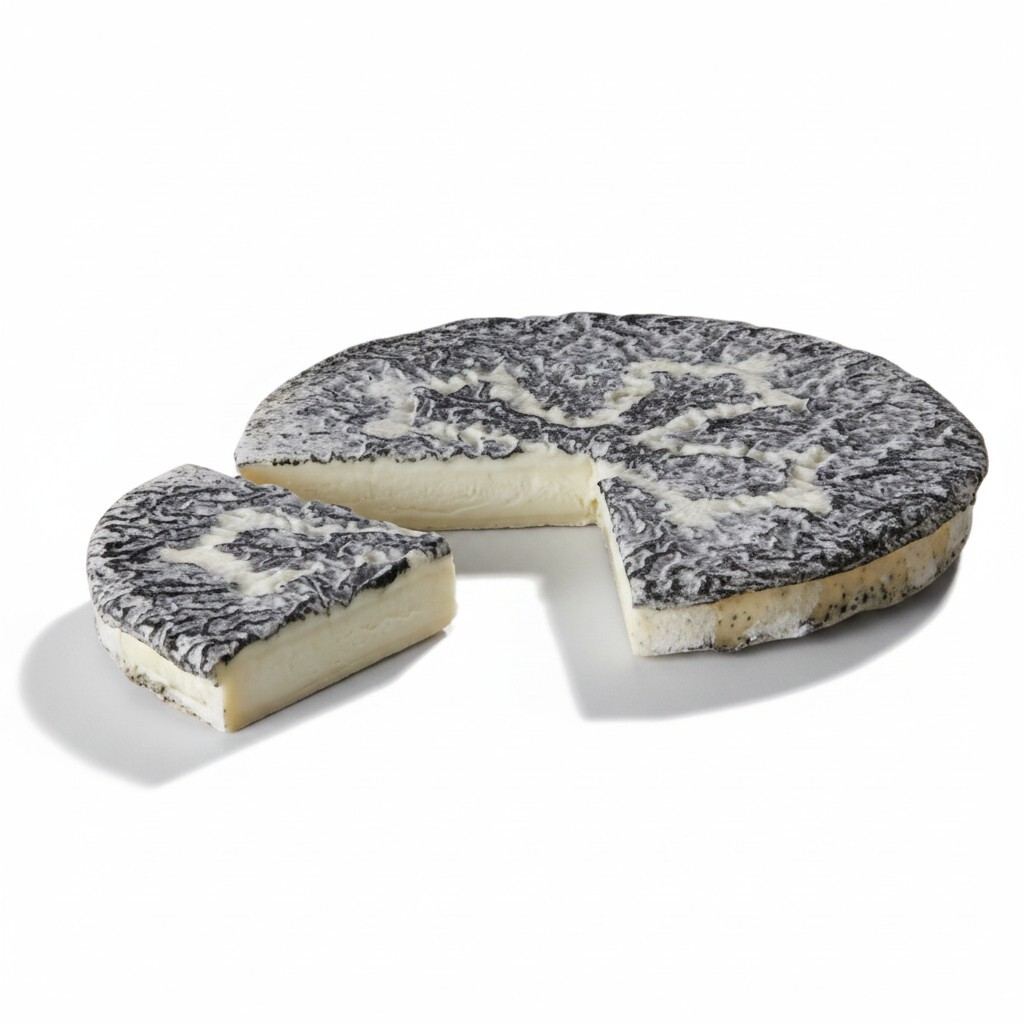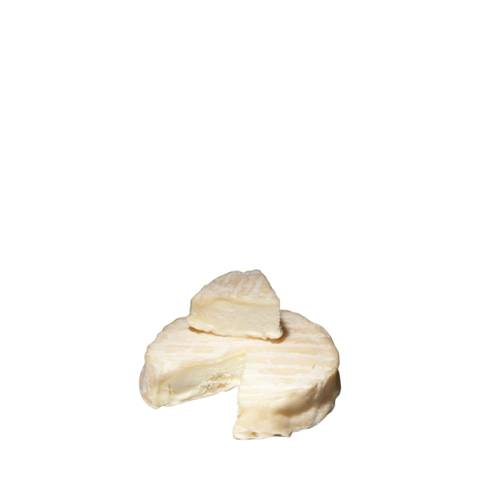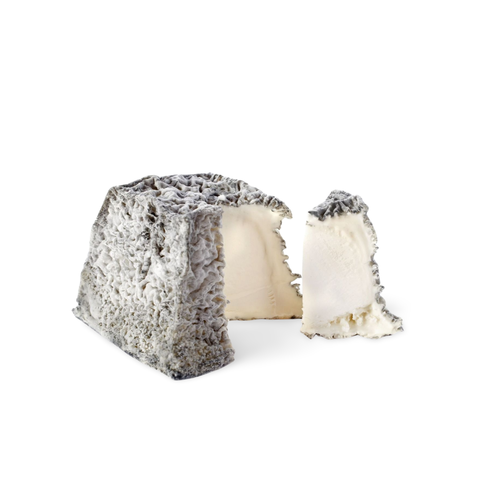
Petit Montesquieu is one of those cheeses that immediately catches the eye before it even reaches the palate. Its flat disc shape, pale bloomy rind, and ash-dusted surface marked with the Occitan cross give it a distinctly regional identity — elegant, symbolic, and quietly dramatic. Made from raw goat’s milk, it offers a very white, creamy paste that becomes more expressive as it matures.
On the palate, it begins with a clean, lactic freshness, followed by the gentle tang typical of well-made goat cheese. The texture may show a soft, creamy layer beneath the rind with a slightly firmer, more delicate center depending on ripeness. As it develops, the flavor becomes more rounded: mild nuttiness, subtle earthiness, dried grass, straw, and a refined caprine note that lingers without overwhelming.
This is not a loud cheese. It is more of a composed little aristocrat — soft-spoken, beautifully dressed, and somehow still the most interesting person at the table. The ash adds visual contrast and supports the traditional rind development, while the goat’s milk brings brightness and elegance. For those who enjoy Loire-style goat cheeses but want something with a more Occitan signature, Petit Montesquieu is a lovely discovery.
Serve Petit Montesquieu as part of a French cheese board, ideally before stronger washed-rind or blue cheeses so its delicate profile can be properly appreciated.
Pair it with:
For a simple serving idea, place the cheese at the center of a small board with honey, nuts, and fruit. Let it sit briefly at room temperature before serving so the paste softens and the aroma opens. Its gentle tang also works beautifully on warm toast with a drizzle of honey and cracked black pepper.
Petit Montesquieu carries a strong sense of place. The cheese is associated with Montesquieu-Volvestre in Haute-Garonne, within the Toulouse Pyrénées area, and its ash-marked surface features the Occitan cross — a powerful regional emblem tied to southern French identity.
This visual detail gives the cheese more than just beauty; it gives it a story. The dark ash against the white rind feels almost ceremonial, like a little edible seal from the south of France. Beneath that striking surface is a cheese that reflects farmhouse goat’s milk traditions: fresh yet mature, rustic yet refined, simple yet memorable. It is the kind of cheese that reminds you why French cheesemaking is not only about flavor, but about landscape, symbols, and the quiet poetry of craft.
Keep refrigerated at 0–4°C. Store in its original wrapping or in cheese paper. Once opened, wrap gently in wax paper or parchment, then place in an airtight container. Avoid plastic directly against the cheese for long storage, as it may trap moisture and affect the rind. Consume within a few days after opening. Bring to room temperature for 20–30 minutes before serving for the best texture and aroma.