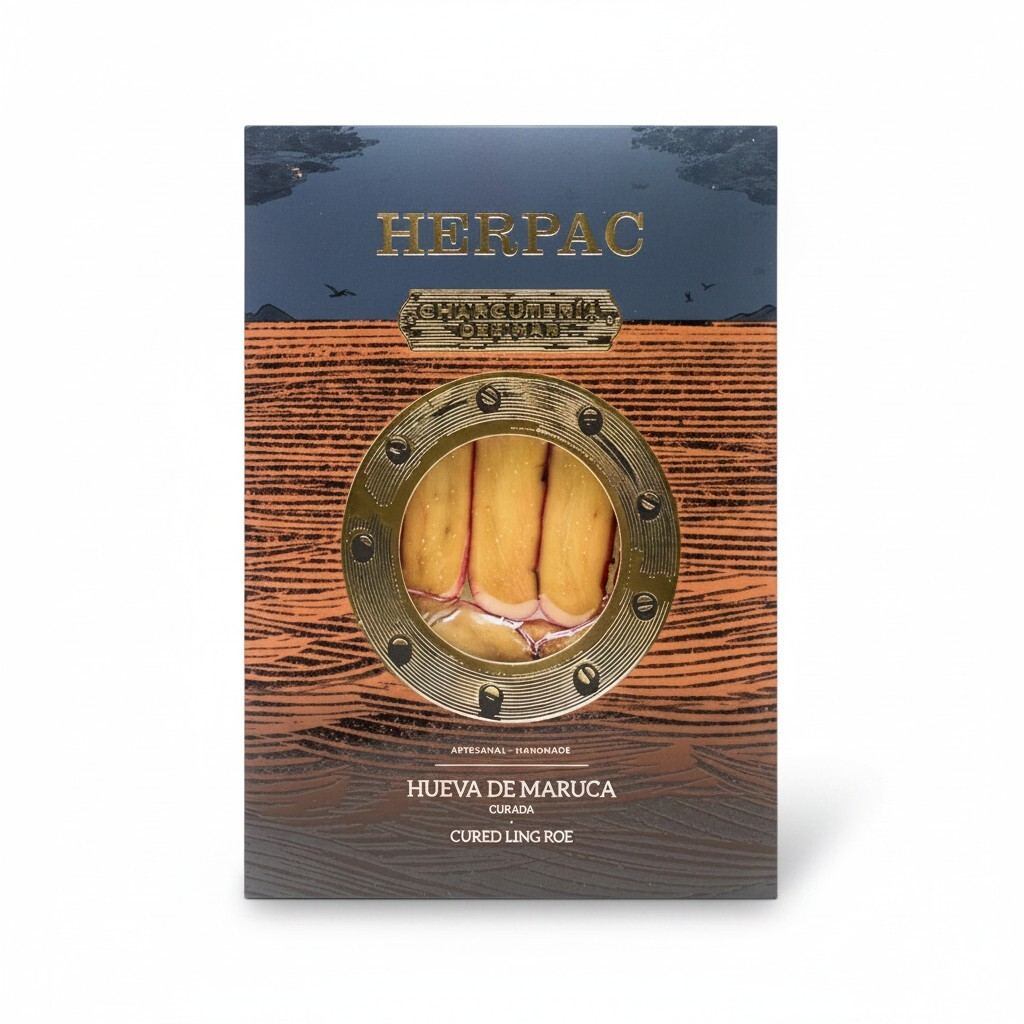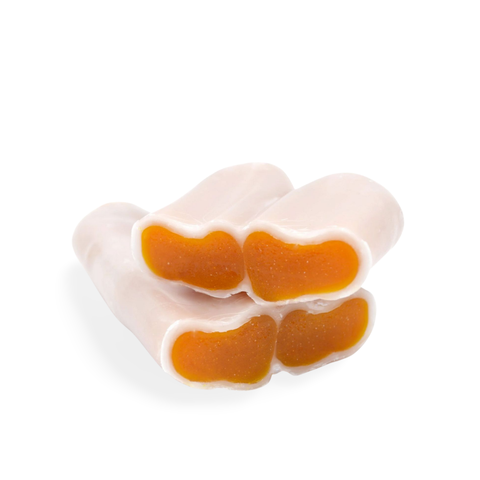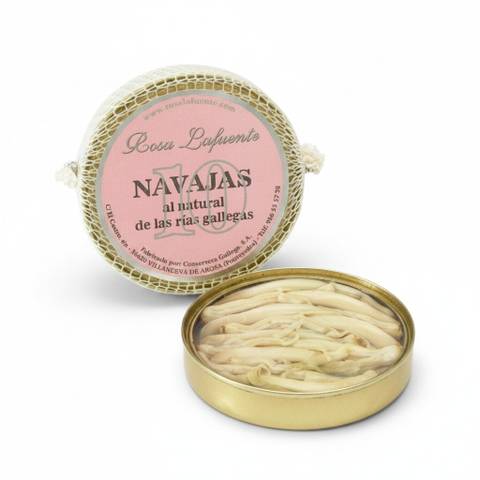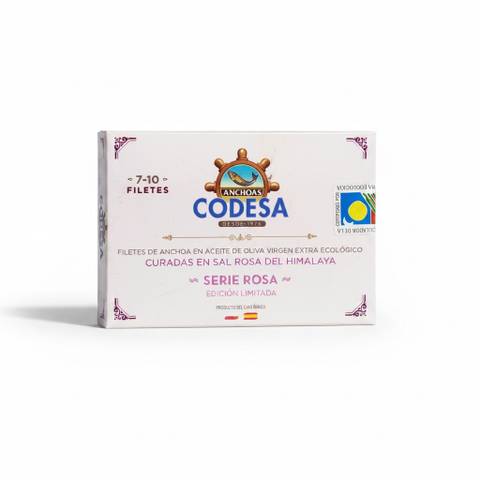
Cured ling roe, or hueva de maruca, is one of those delicacies that speaks in a very direct language: salt, sea, texture, and depth. Herpac’s version carries a bold marine flavor that will appeal to those who enjoy cod roe, bottarga, anchovies, cured seafood, and other intensely savory coastal specialties. The taste is briny and concentrated, with a clean salinity that opens quickly on the palate before settling into a deeper, almost nutty richness. Its texture is part of the charm. When sliced thinly, it has a firm but smooth bite, giving just enough resistance before melting into its savory finish. Compared to softer seafood spreads or milder fish roe, cured ling roe is more assertive and gastronomic, the kind of ingredient that does not need much dressing up. A few slices, good olive oil, and crusty bread are enough. It also works beautifully when grated over warm dishes, where its salty intensity softens and perfumes the plate like seafood seasoning with old-world confidence.
Cured ling roe is traditionally enjoyed as an aperitif, especially when sliced thinly and served simply. The key is restraint. This is not a “pile it on” ingredient; it is the elegant little lightning bolt on the plate.
Try it with:
For an easy tapas plate, slice the cured ling roe thinly, arrange it over warm toasted bread, and finish with olive oil. Add roasted peppers, almonds, or olives on the side. It is simple, dramatic, and very “I just happen to casually own excellent pantry items.”
In Spain, cured seafood belongs to a long tradition of preserving the sea through salt, sun, and time. Hueva de maruca is made from ling roe, with ling being a fish similar to cod. Spanish cured roe is often appreciated for its concentrated marine flavor and its ability to bring depth to tapas, salads, pastas, and other simple dishes. Traditional preparation involves salting and drying the roe, allowing moisture to reduce while flavor becomes more intense and refined. This is why a small portion can carry so much character on a plate. It belongs to the same culinary spirit as bottarga: humble preservation transformed into luxury. Herpac, based in Cadiz, works within this Spanish coastal language of salazones, or salted seafood, where the ocean is preserved not by excess, but by precision.
Keep refrigerated. Once opened, wrap tightly or store in an airtight container and consume as soon as possible for best quality. Slice only what you need, then return the remaining portion to the refrigerator.