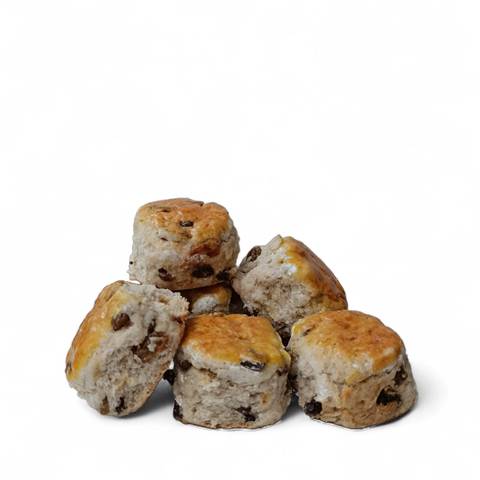
Madge’s Raisin Scones
PHP 374.00



Cornwall’s Golden Cream
PHP 789.00
Delivery date confirmed at checkout
113g, Frozen
Most popularPHP 789.00 each
You’re PHP 3,000.00 away from free delivery in Metro Manila
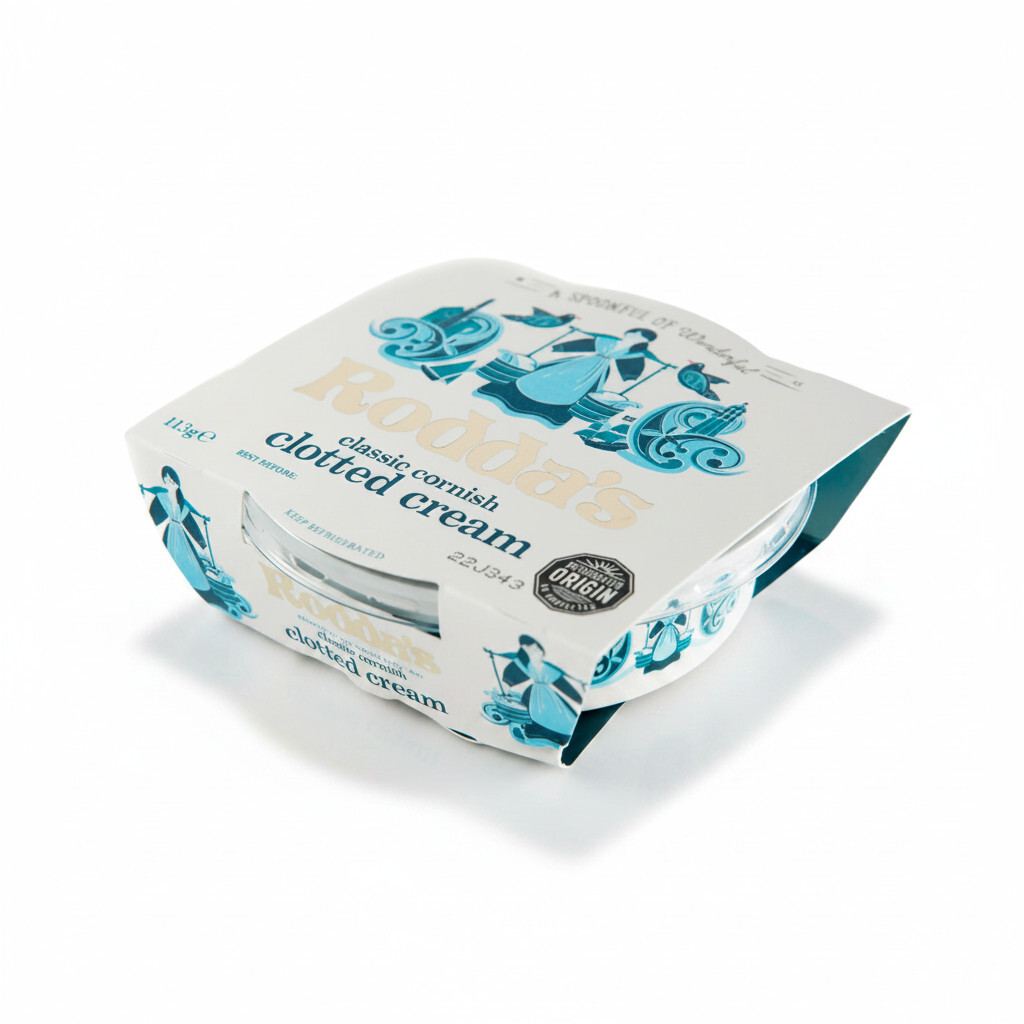
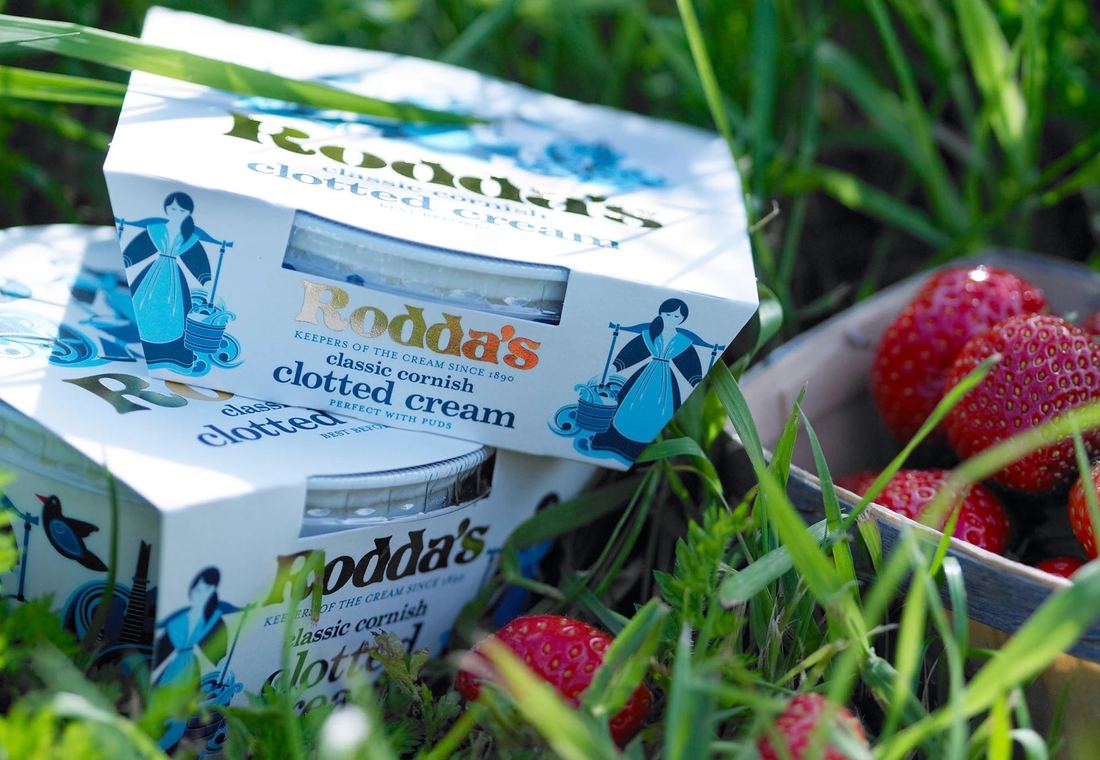
Rodda’s Clotted Cream is the taste of Cornwall in its purest form: thick, gently caramelized cream made from local milk and protected by PDO status. Crafted since 1890, it remains one of Britain’s great dairy traditions — rich, cultured, and unmistakably Cornish.
Temperature-Controlled Delivery
Satisfaction Guarantee
Same-Day Dispatch Before 4PM
Cornwall’s Golden Cream
Rodda’s Clotted Cream is the taste of Cornwall in its purest form: thick, gently caramelized cream made from local milk and protected by PDO status. Crafted since 1890, it remains one of Britain’s great dairy traditions — rich, cultured, and unmistakably Cornish.
PHP 789.00
Delivery date confirmed at checkout
113g, Frozen
Most popularPHP 789.00 each
You’re PHP 3,000.00 away from free delivery in Metro Manila
Temperature-Controlled Delivery
Satisfaction Guarantee
Same-Day Dispatch Before 4PM
Complete the Experience
There are creams that exist merely to soften a scone, and there are creams that become the reason for the ritual itself. Rodda’s belongs entirely to the latter category.
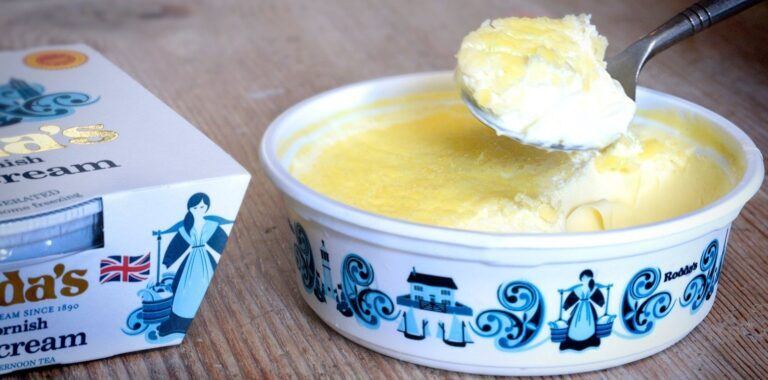
The first thing one notices is the color. True Cornish clotted cream carries a faint golden hue, not the sterile white of industrial creams. That pale yellow comes naturally from the rich grasslands of Cornwall, where dairy cows graze on pastures heavy with carotene and Atlantic moisture. The cream looks alive, almost sunlit.
Then comes the crust — that fragile saffron-colored skin on the surface that devotees quietly treasure. Beneath it lies a texture unlike whipped cream, mascarpone, or butter. It is dense yet soft, spoonable yet structured, thick enough to sit proudly atop warm scones without collapsing. Rodda’s achieves this through slow heating and resting, allowing the cream to rise and clot naturally. Nothing about it tastes hurried.
The flavor unfolds in layers. At first, there is sweetness — not sugary sweetness, but the sweetness of warm milk and toasted cream. Then comes a faint nuttiness, almost reminiscent of browned butter or hazelnut skin, followed by a lingering dairy richness that coats the palate gently rather than aggressively. Industrial “Devon-style” creams often feel flatter, colder, and more homogeneous, designed for shelf life rather than character. Rodda’s retains irregularity, depth, and a subtle cooked-milk complexity that industrial versions frequently lose through excessive standardization.
What makes Cornish clotted cream special is not merely geography but regulation and heritage. “Cornish Clotted Cream” holds Protected Designation of Origin (PDO) status, meaning the milk must come from Cornwall and the cream must be produced there according to traditional methods. It is one of the rare dairy products whose identity is legally tied to its landscape. In an age of generic dairy products and interchangeable branding, that matters.
Rodda’s, founded by Eliza Jane Rodda in 1890, still produces its cream in Cornwall five generations later. The company remains deeply associated with the afternoon tea tradition served in luxury British hotels and country houses. Many prestigious tea rooms use Rodda’s specifically because it delivers the texture and crust expected from authentic Cornish cream.
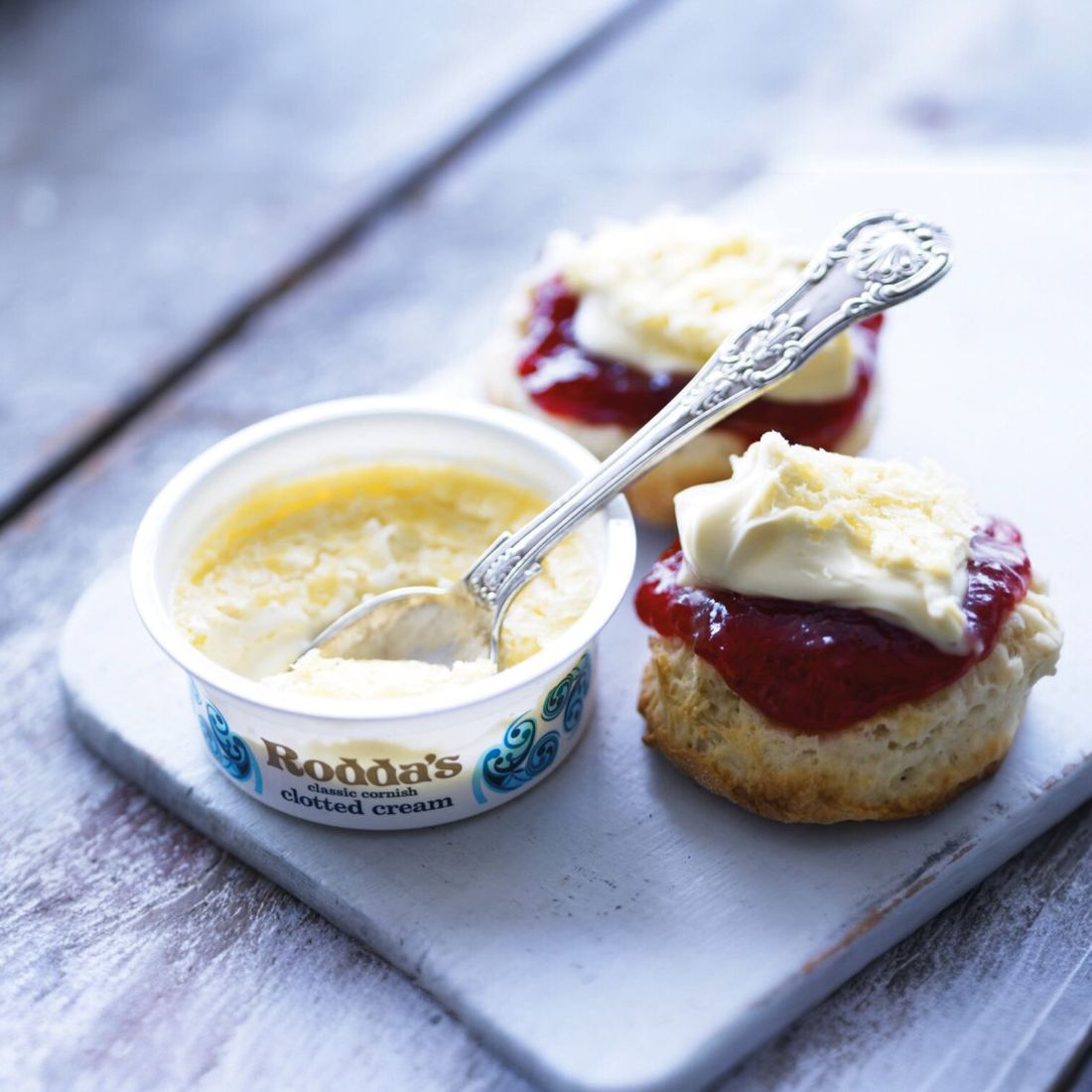
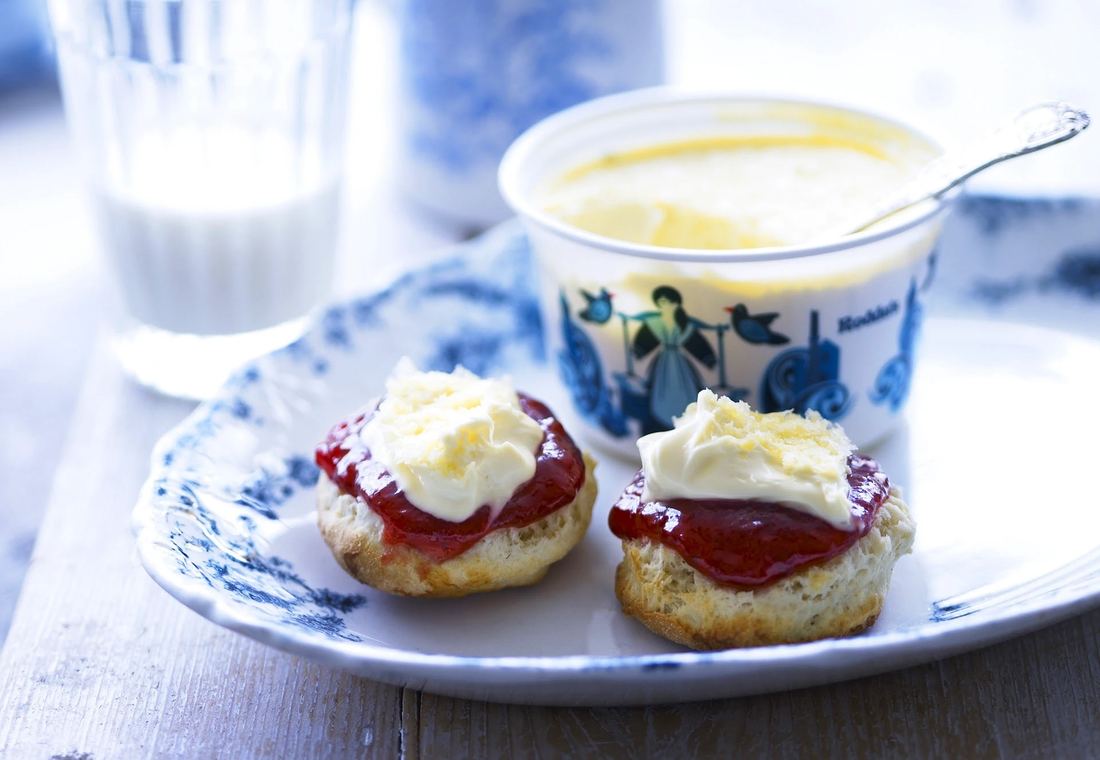
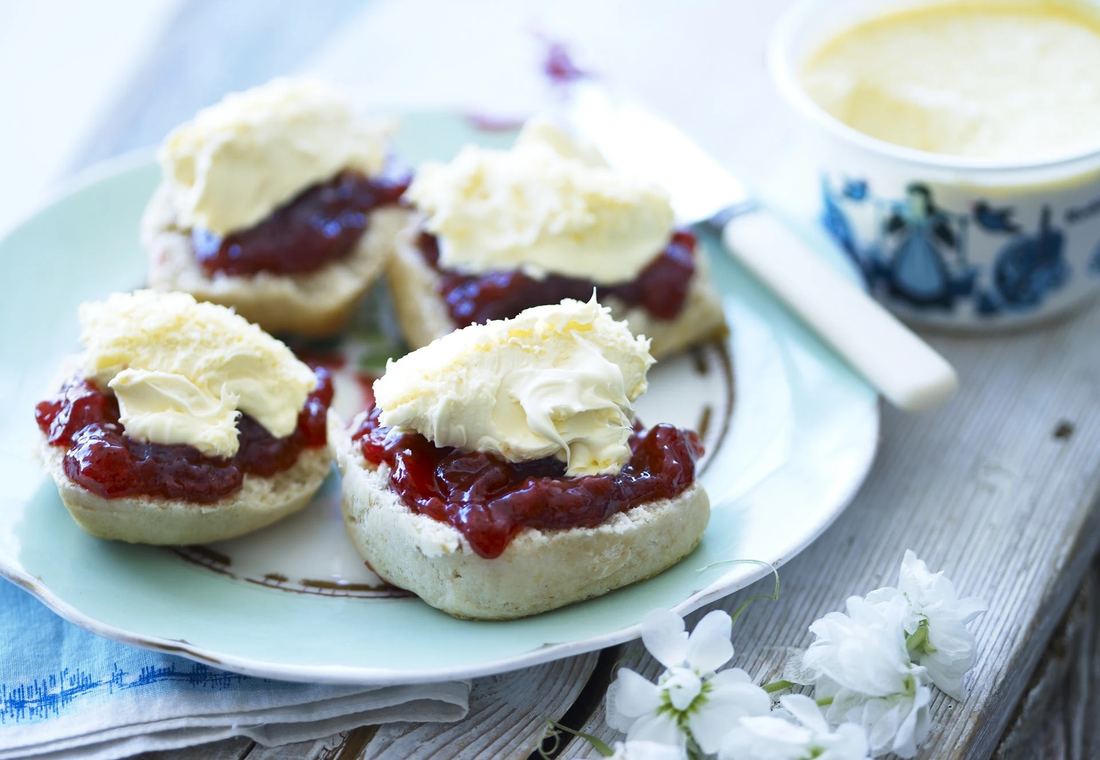
Spread onto a still-warm Madge’s Classic Scone with strawberry jam beneath — as Cornwall insists it should be served — the cream becomes almost architectural. Cool, thick cream against tart fruit and crumbly pastry creates one of Britain’s great culinary balances: richness without heaviness, comfort without vulgarity.
It is not simply cream. It is a regional craft preserved through habit, climate, dairy culture, and stubborn local pride.
Rodda’s Clotted Cream is traditionally associated with afternoon tea, but its uses stretch far beyond the classic scone.
For the best texture, serve slightly chilled but not refrigerator-cold. Excessive cold dulls the aromatic depth and tightens the cream too much.
Cornwall and Devon have argued about cream for generations with the seriousness other regions reserve for politics or religion. The debate concerns not only who invented clotted cream, but also how it should be eaten. Devon spreads cream first, then jam. Cornwall insists on jam first, then cream — allowing the cream to sit visibly on top like a crown.
Yet beyond the playful rivalry lies something more important: authenticity.
In 1998, “Cornish Clotted Cream” received Protected Designation of Origin status under European law, later retained under UK protection schemes. This means authentic Cornish clotted cream cannot simply be imitated elsewhere and marketed under the same name. The milk must come from Cornwall, and the cream must be produced there according to precise traditional methods, including a minimum butterfat content of 55%.
Rodda’s became one of the great custodians of this protected tradition. The company began when Eliza Jane Rodda started making clotted cream in her farmhouse kitchen in 1890. More than a century later, the business remains family-linked and still rooted in Cornwall. Despite its scale, Rodda’s continues to emphasize traditional slow crafting methods rather than ultra-processed industrial shortcuts.
There is also something distinctly British in the emotional attachment people have to clotted cream. For many, it evokes train journeys to seaside towns, damp Cornish afternoons, hotel lounges, silver teapots, and childhood holidays where cream teas arrived on heavy ceramic plates. The product survives not because it is fashionable, but because it remains tied to memory and ritual.
Even the famous golden crust has become almost symbolic. Connoisseurs quietly compare thickness, color, and texture with the seriousness of wine enthusiasts discussing vintages. A proper crust signals patience, careful heating, and milk of sufficient richness.
Rodda’s did not invent clotted cream, but it helped preserve and define what authentic Cornish clotted cream should taste like in the modern world.
Keep frozen at -18°C or below. For best texture and flavor, thaw slowly in the refrigerator for several hours before serving. Once thawed, keep refrigerated and consume within a few days. Do not refreeze after thawing, as repeated freezing may affect the cream’s delicate texture and its characteristic golden crust. Best enjoyed lightly chilled rather than fully cold.
There are creams that exist merely to soften a scone, and there are creams that become the reason for the ritual itself. Rodda’s belongs entirely to the latter category.
The first thing one notices is the color. True Cornish clotted cream carries a faint golden hue, not the sterile white of industrial creams. That pale yellow comes naturally from the rich grasslands of Cornwall, where dairy cows graze on pastures heavy with carotene and Atlantic moisture. The cream looks alive, almost sunlit.
Then comes the crust — that fragile saffron-colored skin on the surface that devotees quietly treasure. Beneath it lies a texture unlike whipped cream, mascarpone, or butter. It is dense yet soft, spoonable yet structured, thick enough to sit proudly atop warm scones without collapsing. Rodda’s achieves this through slow heating and resting, allowing the cream to rise and clot naturally. Nothing about it tastes hurried.
The flavor unfolds in layers. At first, there is sweetness — not sugary sweetness, but the sweetness of warm milk and toasted cream. Then comes a faint nuttiness, almost reminiscent of browned butter or hazelnut skin, followed by a lingering dairy richness that coats the palate gently rather than aggressively. Industrial “Devon-style” creams often feel flatter, colder, and more homogeneous, designed for shelf life rather than character. Rodda’s retains irregularity, depth, and a subtle cooked-milk complexity that industrial versions frequently lose through excessive standardization.
What makes Cornish clotted cream special is not merely geography but regulation and heritage. “Cornish Clotted Cream” holds Protected Designation of Origin (PDO) status, meaning the milk must come from Cornwall and the cream must be produced there according to traditional methods. It is one of the rare dairy products whose identity is legally tied to its landscape. In an age of generic dairy products and interchangeable branding, that matters.
Rodda’s, founded by Eliza Jane Rodda in 1890, still produces its cream in Cornwall five generations later. The company remains deeply associated with the afternoon tea tradition served in luxury British hotels and country houses. Many prestigious tea rooms use Rodda’s specifically because it delivers the texture and crust expected from authentic Cornish cream.
Spread onto a still-warm Madge’s Classic Scone with strawberry jam beneath — as Cornwall insists it should be served — the cream becomes almost architectural. Cool, thick cream against tart fruit and crumbly pastry creates one of Britain’s great culinary balances: richness without heaviness, comfort without vulgarity.
It is not simply cream. It is a regional craft preserved through habit, climate, dairy culture, and stubborn local pride.
Rodda’s Clotted Cream is traditionally associated with afternoon tea, but its uses stretch far beyond the classic scone.
For the best texture, serve slightly chilled but not refrigerator-cold. Excessive cold dulls the aromatic depth and tightens the cream too much.
Cornwall and Devon have argued about cream for generations with the seriousness other regions reserve for politics or religion. The debate concerns not only who invented clotted cream, but also how it should be eaten. Devon spreads cream first, then jam. Cornwall insists on jam first, then cream — allowing the cream to sit visibly on top like a crown.
Yet beyond the playful rivalry lies something more important: authenticity.
In 1998, “Cornish Clotted Cream” received Protected Designation of Origin status under European law, later retained under UK protection schemes. This means authentic Cornish clotted cream cannot simply be imitated elsewhere and marketed under the same name. The milk must come from Cornwall, and the cream must be produced there according to precise traditional methods, including a minimum butterfat content of 55%.
Rodda’s became one of the great custodians of this protected tradition. The company began when Eliza Jane Rodda started making clotted cream in her farmhouse kitchen in 1890. More than a century later, the business remains family-linked and still rooted in Cornwall. Despite its scale, Rodda’s continues to emphasize traditional slow crafting methods rather than ultra-processed industrial shortcuts.
There is also something distinctly British in the emotional attachment people have to clotted cream. For many, it evokes train journeys to seaside towns, damp Cornish afternoons, hotel lounges, silver teapots, and childhood holidays where cream teas arrived on heavy ceramic plates. The product survives not because it is fashionable, but because it remains tied to memory and ritual.
Even the famous golden crust has become almost symbolic. Connoisseurs quietly compare thickness, color, and texture with the seriousness of wine enthusiasts discussing vintages. A proper crust signals patience, careful heating, and milk of sufficient richness.
Rodda’s did not invent clotted cream, but it helped preserve and define what authentic Cornish clotted cream should taste like in the modern world.
Keep frozen at -18°C or below. For best texture and flavor, thaw slowly in the refrigerator for several hours before serving. Once thawed, keep refrigerated and consume within a few days. Do not refreeze after thawing, as repeated freezing may affect the cream’s delicate texture and its characteristic golden crust. Best enjoyed lightly chilled rather than fully cold.
Curated Selection